Last updated November 21, 2026
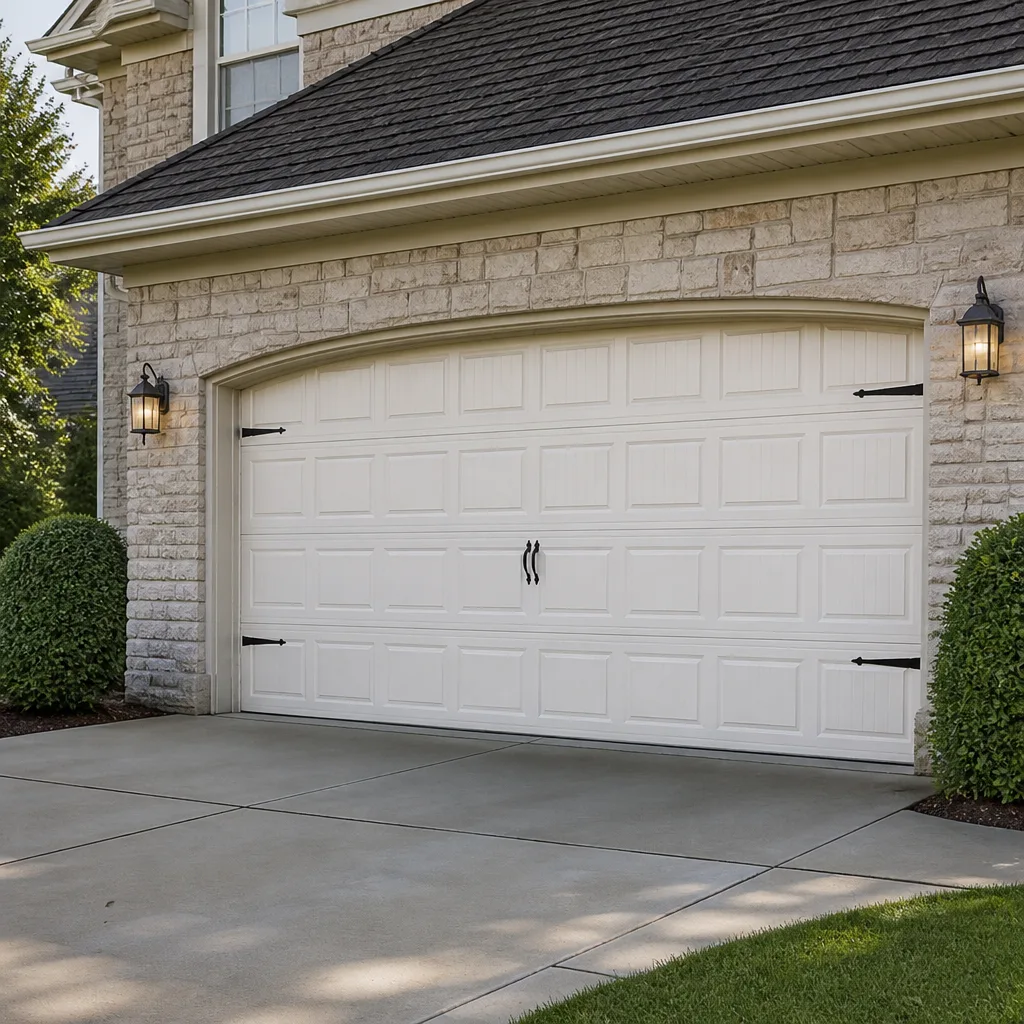 Raised-panel steel
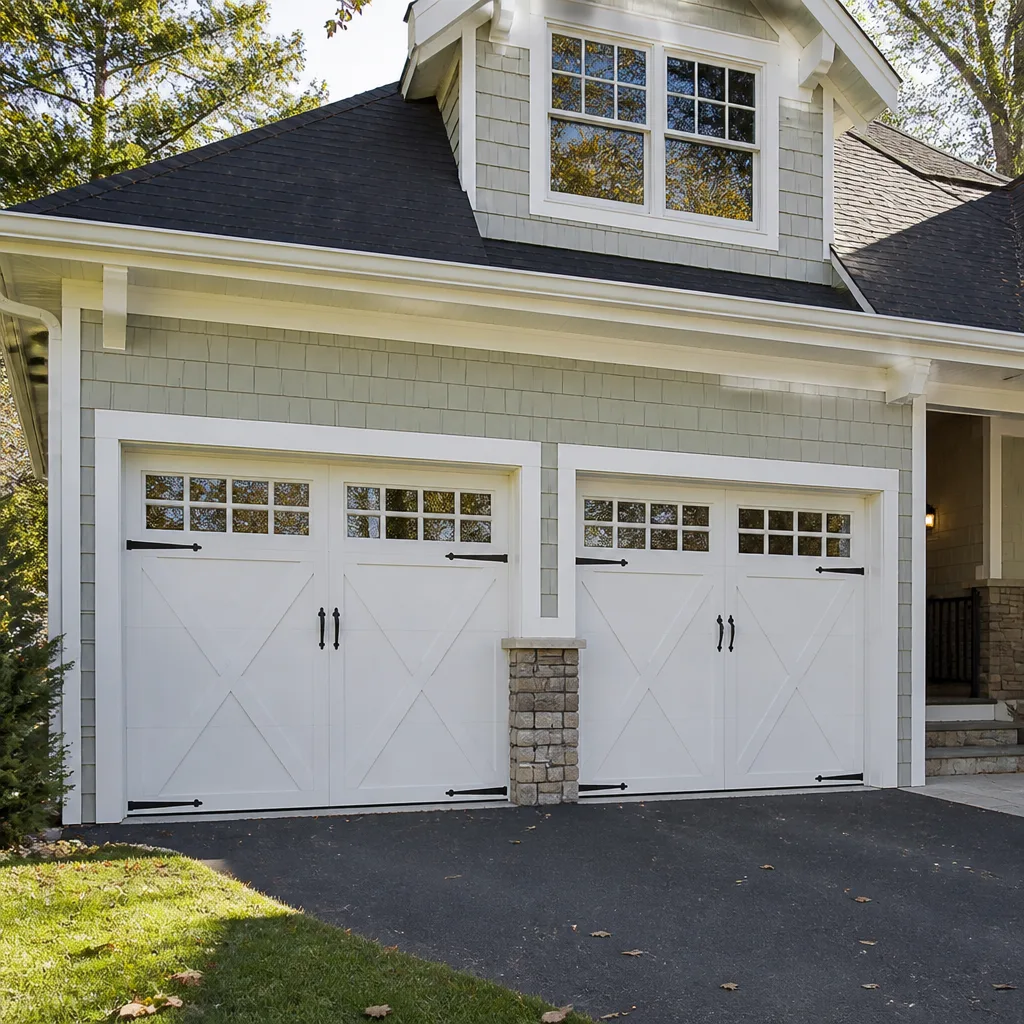 Carriage house
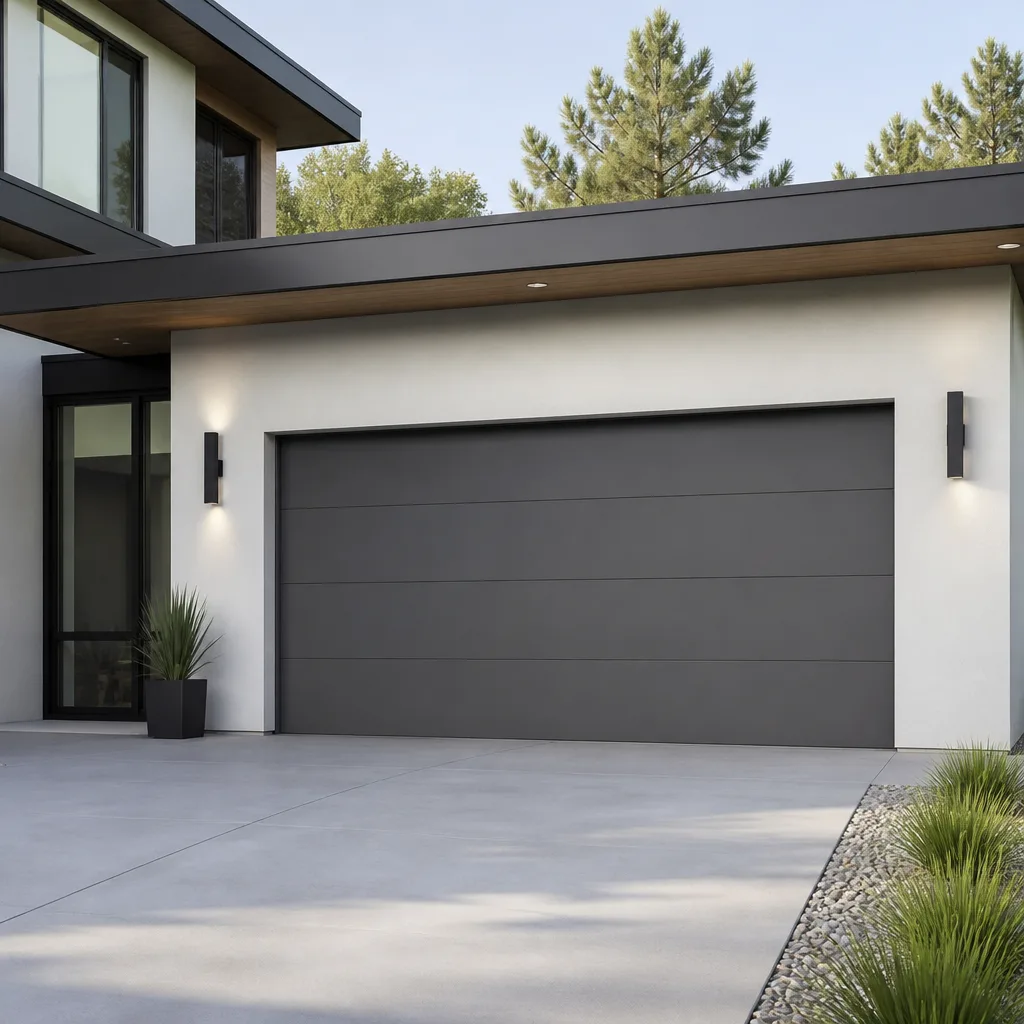 Modern flush
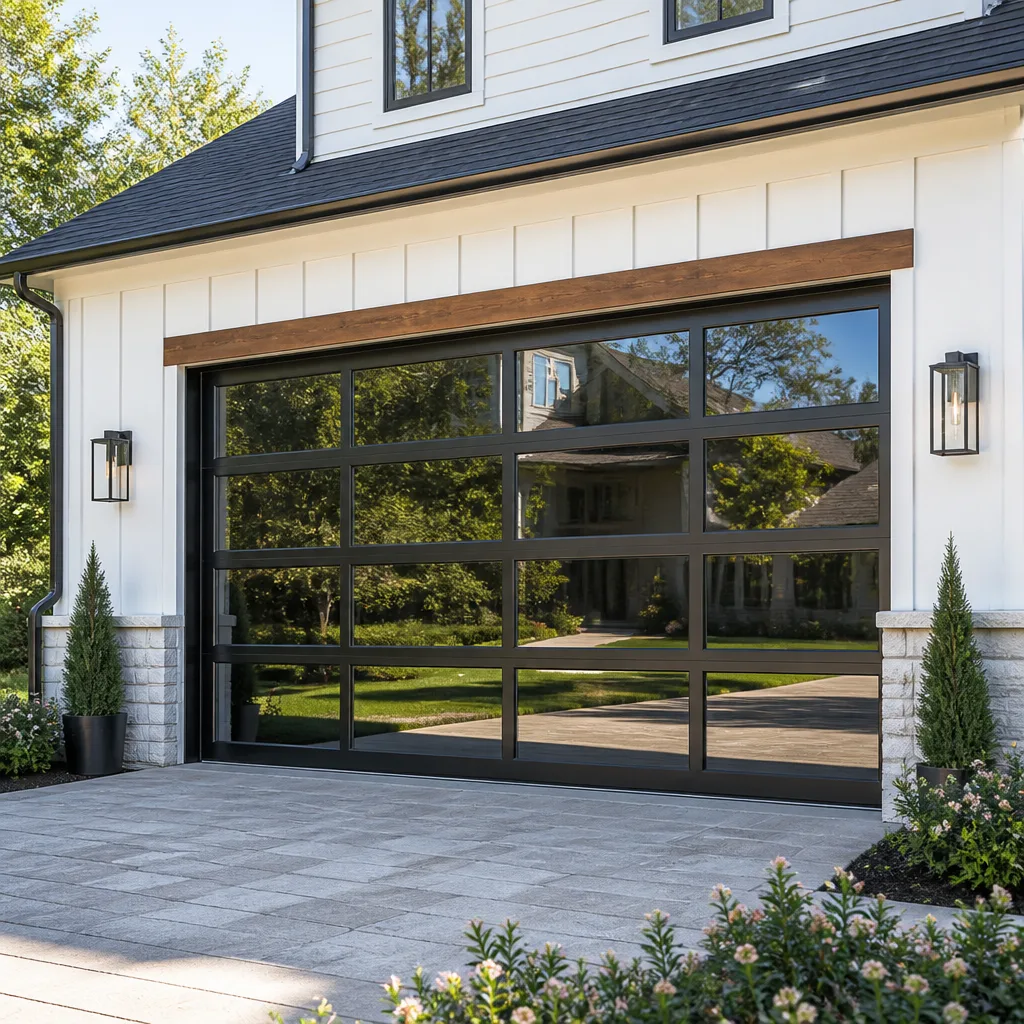 Full-view glass
 LiftMaster openers
 Chamberlain openers
Full 25-point door and opener safety check with every visit - springs, cables, rollers, tracks, and your LiftMaster or Chamberlain opener included
You get a price before we start. It does not change when the pro arrives.
Get your free estimateDIY vs Professional Garage Door: The Pearland Homeowner’s Decision Guide
Most homeowners frame the garage door repair decision as a money question. Can I save a few hundred dollars by handling this myself? That’s the wrong lens. Garage doors are one of the few home systems where a single component – the torsion spring – stores enough mechanical energy to break bones or worse, and the failure isn’t a gradual mistake you can course-correct halfway through. It’s instantaneous. That fact alone should reframe every DIY decision you make about your door in Pearland. This guide breaks the work down task by task, so you know exactly what’s safe to touch, what isn’t, and where the real cost sits.
Quick Answer
Roughly 80% of routine garage door maintenance is homeowner-safe: lubrication, weatherstripping replacement, sensor alignment, and visual inspections. The remaining 20% – springs, cables, torsion hardware, and opener gear replacement – carries real injury risk and should go to a trained technician. In Pearland, the tasks worth handing off are the ones where a mistake can hurt you or void your warranty.
Styles & brands we work with
- Raised-panel steel
- Carriage house
- Modern flush
- Full-view glass
- LiftMaster openers
- Chamberlain openers
Table of Contents
- Why This Isn’t Really a Cost Question
- Task-by-Task: What’s Safe and What Isn’t
- The Physics of Torsion Springs, Explained Plainly
- Real Cost Comparison for DIY-Viable Jobs
- Warranty and Insurance Implications of DIY Work
- The Middle Ground: Prep Work That Reduces Your Bill
- Pearland-Specific Considerations
- Diagnostics You Can Do Before Calling
Why This Isn’t Really a Cost Question
In our experience, homeowners who get hurt or create bigger repair bills aren’t reckless. They’re careful people who underestimated one thing: the difference between a system that fails gradually and a system that fails instantly. A leaking faucet gives you time. A miswired outlet trips a breaker. A torsion spring under tension doesn’t warn you. It either holds or it releases, and when it releases, the stored energy goes somewhere.
That’s why the DIY vs professional question for garage doors isn’t framed around dollars. It’s framed around failure mode. Ask three questions about any task:
- Does the task involve stored mechanical energy? If yes, the failure is instantaneous and the injury is real.
- Does a mistake create a secondary hazard? A door that comes off its track isn’t just inconvenient – it’s a falling object.
- Does the task affect the manufacturer warranty? Many door warranties have exclusions for homeowner-modified or improperly serviced components.
If a task clears all three, it’s probably DIY-appropriate. If it fails any one of them, the math shifts. We’ve seen Pearland homeowners pay a technician to redo a spring adjustment that was going to cost the same either way, only now the door is also out of alignment. The savings never appeared.
Task-by-Task: What’s Safe and What Isn’t
Here’s the breakdown most guides skip. Not every garage door task belongs in the “call a pro” bucket, and pretending otherwise wastes your money. You can handle more than you think – just not the high-tension parts. Whether it’s a broken spring, a failing opener, or a full replacement, the point is matching the task to the right hands.
Homeowner-Appropriate Tasks
These are genuinely safe for a careful homeowner with basic tools. None of them involve stored spring tension or high-voltage wiring.
- Weatherstripping replacement: The rubber seal along the bottom and sides of the door. Pull the old strip, slide in the new one, done in under an hour.
- Lubrication: Hinges, rollers, and the track get a light coat of garage-door lubricant (not WD-40) two to three times a year. This is the single best thing you can do for door longevity.
- Safety sensor alignment: If the door reverses on its own, the photo-eye sensors at the base of the track are probably misaligned or dirty. Wipe the lenses, check that the indicator lights are solid, and nudge them until they line up.
- Visual inspection: Look for frayed cables, worn rollers, loose bolts, and gaps in the weatherstripping. Catching these early prevents bigger repairs.
- Opener remote and keypad programming: Following the manual for your opener brand, you can pair a new remote in a few minutes.
Tasks That Belong With a Technician
These are the jobs where the failure mode is instantaneous and the injury potential is serious. Pay for these.
- Torsion spring replacement or adjustment: The spring above the door holds the full weight of the door in tension. This is the single most dangerous component in the system.
- Extension spring replacement: Safer than torsion, but still under significant tension and still capable of causing injury if it releases unexpectedly.
- Cable replacement: Cables are under extreme tension and are frequently the failure point when a spring breaks. Never touch a frayed cable.
- Track realignment: A bent or misaligned track can cause the door to come off its rollers, which is a falling-object hazard.
- Opener gear and motor replacement: Involves electrical work, disconnecting the door from the operator, and mechanical reinstallation.
- Panel replacement: A damaged panel affects the balance of the whole door. On Amarr and Clopay doors especially, panel weights are matched to the specific model – a generic panel throws the door out of balance.
If you’re not sure where a task falls, that’s your answer. Call a specialist who can diagnose it. Pearland Garage Door Repair Pros handles garage door spring repair as a dedicated service because it’s the most commonly mishandled component on the door – and the most commonly attempted DIY job that ends in a service call anyway.
The Physics of Torsion Springs, Explained Plainly
You don’t need a physics degree to understand why a torsion spring is different from other home repair risks, but you do need to understand one concept: stored energy. A torsion spring is a coiled steel bar wound under tension. Its entire job is to hold the weight of a 200- to 300-pound door so that your opener only has to lift a fraction of that. When the door is down, the spring is wound tight. When the door goes up, the spring unwinds, releasing that stored energy slowly and evenly.
That energy has to go somewhere. When a spring fails – whether from fatigue, corrosion, or a homeowner trying to adjust the winding – the release is instantaneous. There’s no warning creak you can act on. There’s no gradual loosening you can stop. The spring releases its energy in a fraction of a second, and anything in its path takes the hit. That includes the winding bars a homeowner is holding when they attempt the adjustment.
This is why we treat spring work as a separate category from other garage door repairs. Our technicians have up to 10 years of experience, and the first thing they learn is that torsion work has no margin for error. There’s a specific procedure: winding bars sized to the spring, a controlled release, a matched replacement spring, and a balance test afterward. Skipping any step creates a hazard that doesn’t show up until the door is in motion.
Extension springs are a milder version of the same physics, but “milder” doesn’t mean safe. They’re still under meaningful tension, and an unsecured extension spring that releases can damage the door, the car, or the person nearby. If you’re in Pearland and your door is making a snapping sound or the spring looks stretched, that’s a call-now situation, not a watch-and-wait.
Real Cost Comparison for DIY-Viable Jobs
Here’s where the math actually works in the homeowner’s favor. For the safe tasks, the comparison isn’t close – parts are cheap, time is short, and the risk of error is low enough that a service call rarely justifies itself. The trick is knowing which tasks fall into that bucket. For the tasks that need a specialist, the numbers depend on your specific door, so the right move is a written estimate rather than a guess.
DIY-Viable Tasks: Parts, Time, and Reality Check
- Bottom weatherstripping: The seal itself is inexpensive at any hardware store, and the job takes under an hour with a screwdriver or a pair of pliers. A service call adds a trip charge on top of the same part.
- Lubrication: A can of garage-door lubricant costs less than a coffee, and the job takes 15 minutes. This is pure savings.
- Sensor alignment: Free. A rag and two minutes of adjustment.
- Remote programming: The manual is free online. A replacement remote is the only cost.
For these tasks, DIY wins on every axis: cost, time, and risk. The only thing to watch is that you’re using the right part for your door. A universal weatherstrip works on most doors, but on a Wayne Dalton door with a proprietary bottom seal, a generic strip may not fit the track channel.
Tasks That Need a Specialist: Why the DIY Math Doesn’t Work
For spring, cable, track, and opener work, the DIY math fails not because the parts are expensive – they aren’t – but because the cost of a mistake dwarfs the savings. A misinstalled spring can damage the door, the opener, and the tracks, turning a single-component repair into a full system job. A track that’s been nudged out of alignment can send the door off its rollers. Those are the scenarios where the “savings” evaporate.
If you want to know what a specific repair runs for your door, the honest answer is that it depends on the door’s weight, the spring type, and the access. That’s why we quote before any work starts and put it in writing. Call (844) 956-5614 for a free estimate on the tasks that need a specialist, and handle the safe ones yourself.
Warranty and Insurance Implications of DIY Work
This is the part homeowners rarely think about until it’s too late. Garage door systems come with two layers of warranty: the door manufacturer’s warranty (Clopay, Amarr, Wayne Dalton, and Raynor all publish their terms) and the opener manufacturer’s warranty. Both typically include language that excludes damage caused by improper installation, unauthorized modification, or homeowner service of covered components.
What that means in practice:
- Spring and cable work performed by a homeowner is one of the most common warranty exclusions. If the door later fails and the manufacturer can trace it to a homeowner adjustment, the claim is likely to be denied.
- Opener repairs done without following the manufacturer’s procedure can void the opener warranty, even on a LiftMaster or Chamberlain unit that’s otherwise well-built.
- Panel replacement with a non-matching panel can void the door’s finish and structural warranty, particularly on doors where panel weights are matched.
On the insurance side, the picture is less about the door and more about the incident. If a DIY repair leads to a door failure that damages a vehicle or injures someone, the claim falls under your homeowner’s policy, and the insurer will look at whether the work was done to a reasonable standard. We can’t speak to specific policy language – that’s a question for your insurer – but it’s worth a call before you attempt a repair you’re not trained for.
There’s also the installer warranty. Many garage door installers include a labor warranty that covers their work. Homeowner repairs during that window can void the labor coverage even if the parts warranty survives. If your door was installed recently, check the paperwork before you touch anything.
The Middle Ground: Prep Work That Reduces Your Bill
The DIY vs professional question has a third answer that most guides ignore: you can do meaningful prep work that reduces the billable time on the service call. A technician who arrives to a cleared garage, a documented symptom, and a known door model can diagnose and repair faster. That’s real savings, and it’s low-risk.
What to Do Before the Technician Arrives
- Clear the garage floor and the door’s path. Technicians need room to work and to test the door through a full cycle.
- Disconnect the opener if the door is stuck. The manual release cord (usually red) lets you disengage the door from the operator so it can be moved manually. Only do this if you can lift the door safely.
- Note the door brand and model. If you know it’s a Raynor or a Craftsman, say so. Brand-specific diagnosis is faster than generic troubleshooting.
- Write down the symptom. “Grinding noise at the top of the door when it closes” is more useful than “it’s broken.”
- Check the sensors. If the door reverses immediately, confirm the sensor lights are solid before you call. A dirty sensor is a free fix, and a technician won’t charge you for the diagnosis if you’ve already done it.
- Photograph the door in its current position. If the door is off its track or crooked, a photo helps the dispatcher match the right technician and parts.
What you shouldn’t do is attempt a partial repair to “make it easier” for the technician. We’ve seen homeowners loosen a cable to relieve tension before a service call, which turns a spring replacement into a spring-and-cable job. Prep work means clearing the path and documenting the symptom, not touching the tensioned components.
Pearland-Specific Considerations
Garage doors in Pearland face a specific set of conditions that shape what fails and what lasts. The summers are long, hot, and humid, and that humidity works on the door year-round. Metal components – springs, hinges, rollers, and the track – corrode faster in humid air than in dry climates. Wood doors and wood-composite doors can warp or swell at the bottom edge, which changes the door’s balance and puts more load on the opener. The sustained heat also stresses opener motors and the plastic gears inside them, which is why opener gear failure is more common here than in cooler regions.
The housing stock matters too. Pearland has a large share of newer construction, and newer doors usually come with opener systems that are still under the installer’s labor warranty. That changes the DIY calculus: a homeowner repair on a door that’s still covered by the installer can void the coverage for no savings. The neighborhoods around Shadow Creek Ranch and Silverlake have a mix of door brands, and the door model matters more than the neighborhood when you’re deciding whether to DIY.
There’s also the practical reality of living in a master-planned community. HOA rules in some Pearland neighborhoods govern door color, panel style, and visible hardware. If you’re replacing a panel yourself, check the HOA spec before you order the part. A panel that doesn’t match the spec is a panel you’ll be reinstalling on your own dime.
What Pearland doesn’t have is a punishing winter. The mild winters mean springs don’t face the same freeze-driven fatigue cycle as colder climates, but the summer humidity more than compensates on the corrosion side. If your door is more than a few years old and you haven’t looked at the springs, this is the season to look.
Diagnostics You Can Do Before Calling
Before you pick up the phone, run this five-minute check. It won’t fix the door, but it tells you what kind of problem you have – and that determines whether it’s a DIY job or a service call.
- Listen. A grinding noise from the top of the door usually points to a torsion spring or a bearing plate. A rattling noise from the opener points to the gear or chain. A single loud snap followed by a door that won’t lift is almost always a broken spring.
- Look at the door’s position. A door that’s crooked, off its track, or hanging at an angle is a hazard. Don’t run the opener. Disconnect it and call.
- Check the balance. Disconnect the opener and lift the door halfway by hand. It should stay in place. If it drops or rises on its own, the springs are out of balance.
- Test the sensors. Wave an object in front of the photo-eye. The door should reverse. If it doesn’t, check the sensor alignment first.
- Look at the weatherstrip. Light visible under the door means the bottom seal needs replacing. That’s a DIY job.
If the diagnosis points to a spring, cable, track, or opener issue, the next step is a call. For everything else, you can probably handle it. Pearland Garage Door Repair Pros covers garage door repair for the tasks that need a trained hand, and garage door opener repair for the diagnostics that come back pointing at the operator.
Common Mistakes to Avoid
- Using the wrong lubricant. WD-40 and other penetrating oils attract dust and gum up over time. Use a dedicated garage-door lubricant on hinges and rollers, and never grease the track itself – the track should be clean and dry.
- Adjusting the spring without the right winding bars. Screwdrivers and ratchets aren’t winding bars. They slip, and when they slip, the spring releases. This is the single most common cause of DIY garage door injuries.
- Assuming a new opener will fix a spring problem. A failing opener is often a symptom of a door that’s out of balance. Putting a new LiftMaster on a door with weak springs burns out the new opener faster than the old one failed. Pearland homeowners in humid neighborhoods should check the springs before pricing an opener.
- Replacing one spring of a matched pair. If your door has two torsion springs, they were matched at the factory and have cycled the same number of times. Replacing one leaves the door unbalanced and the old spring will fail next.
- Ignoring a frayed cable. Cables are frequently the failure point when a spring breaks. A frayed cable is a call-now symptom, not a wait-and-see.
- Skipping the HOA check before a panel replacement. Pearland HOAs in master-planned communities often specify door color and style. A panel that doesn’t match the spec is a redo.
- Running the opener on a crooked door. If the door is off its track, the opener will pull against the tracks and can bend them. Disconnect the door and call instead.
See the difference
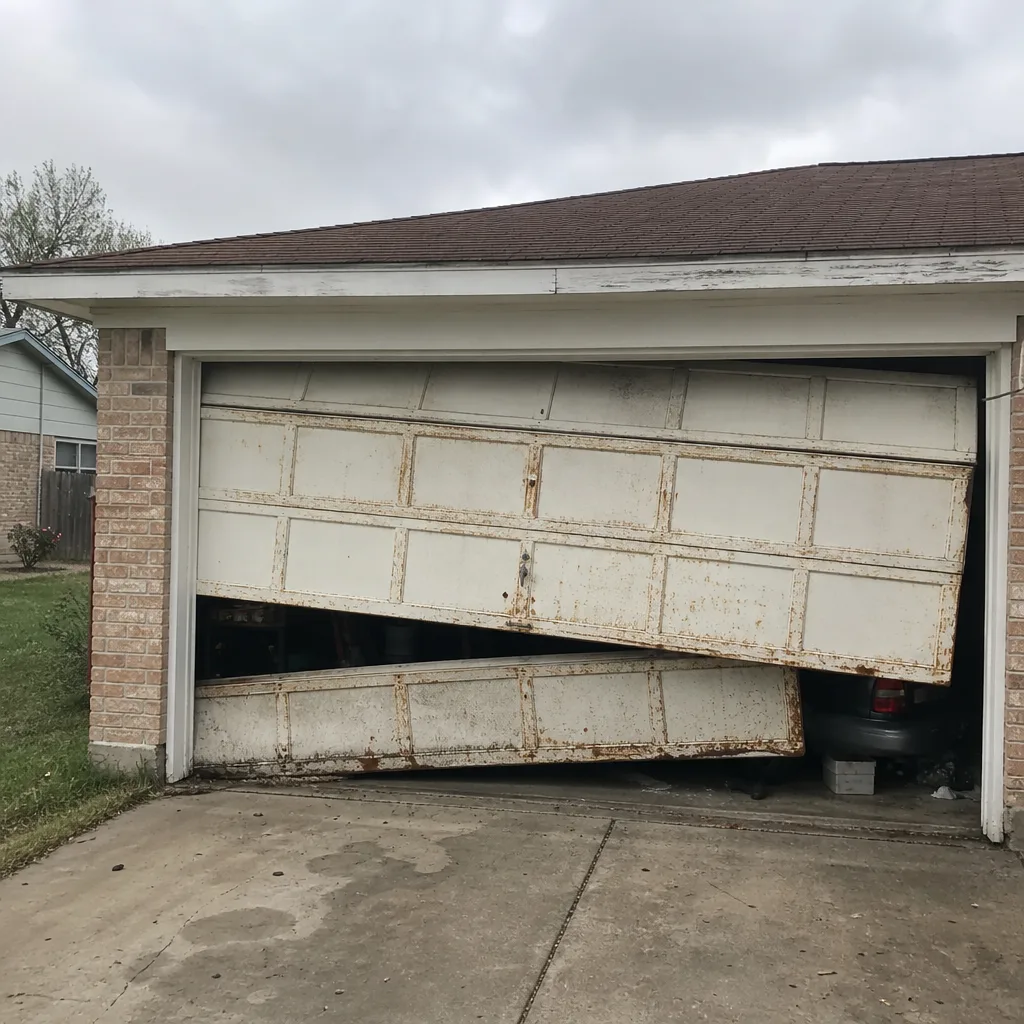 Before
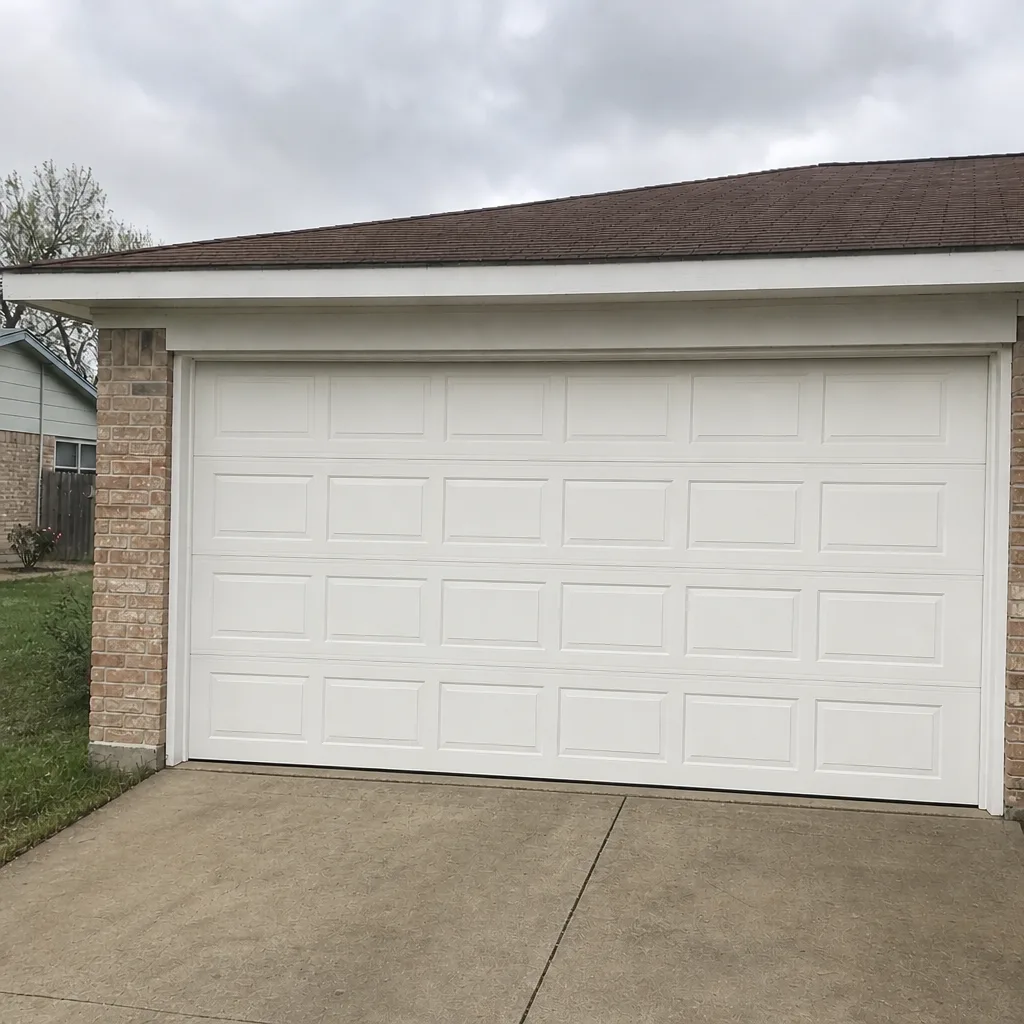 After
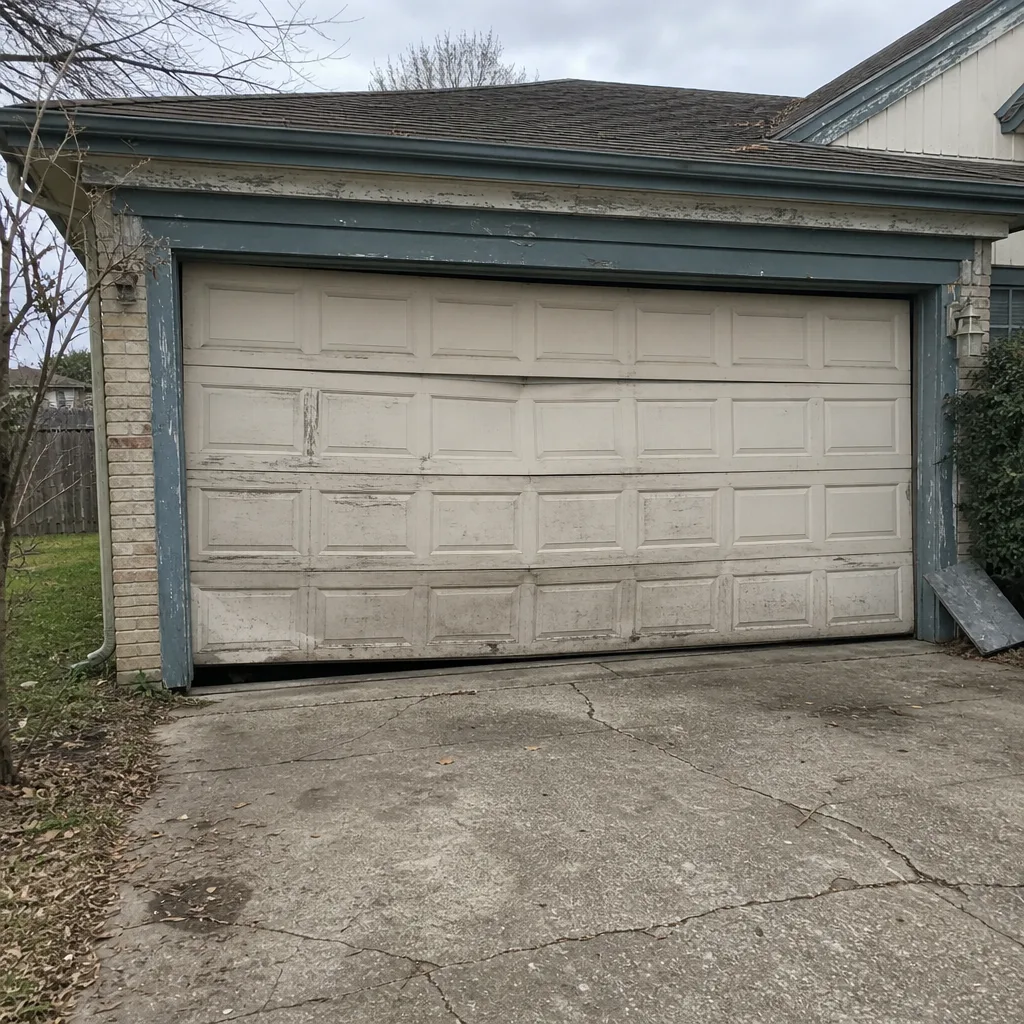 Before
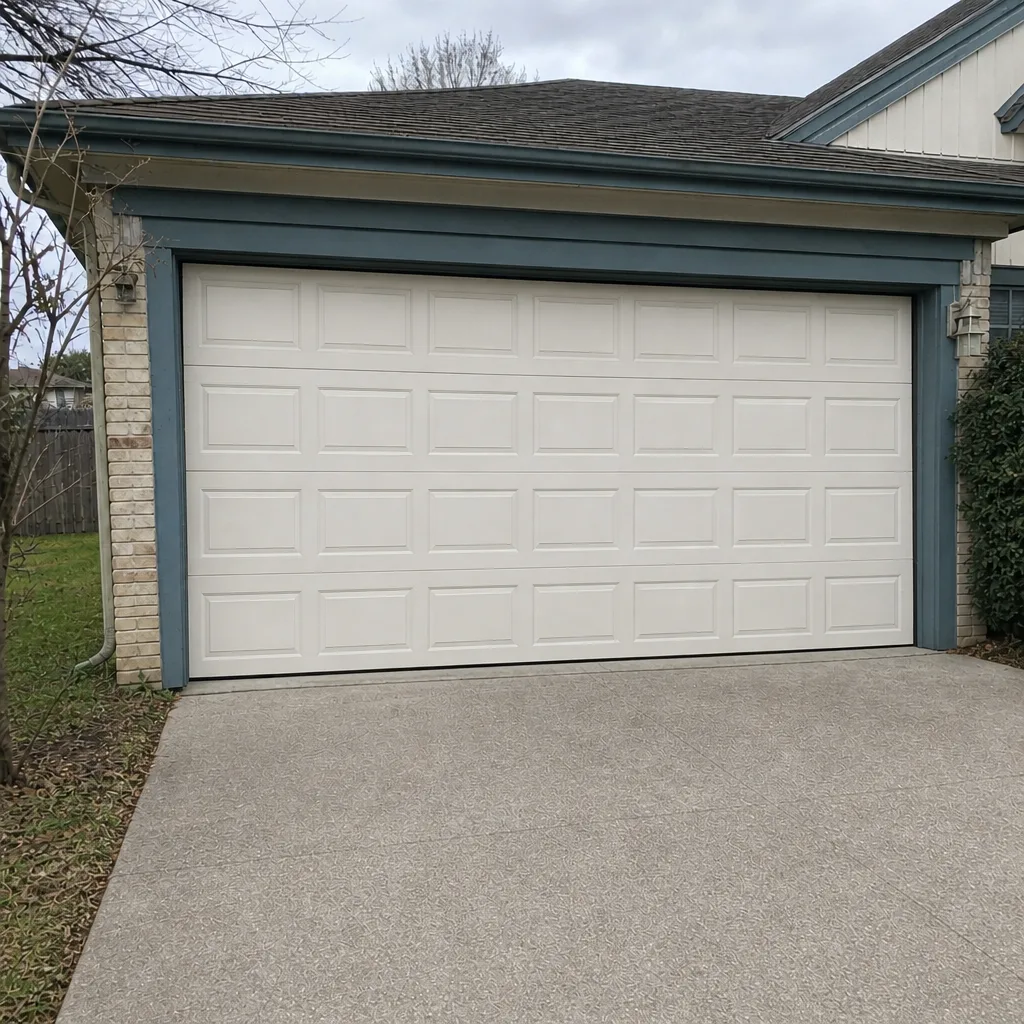 After
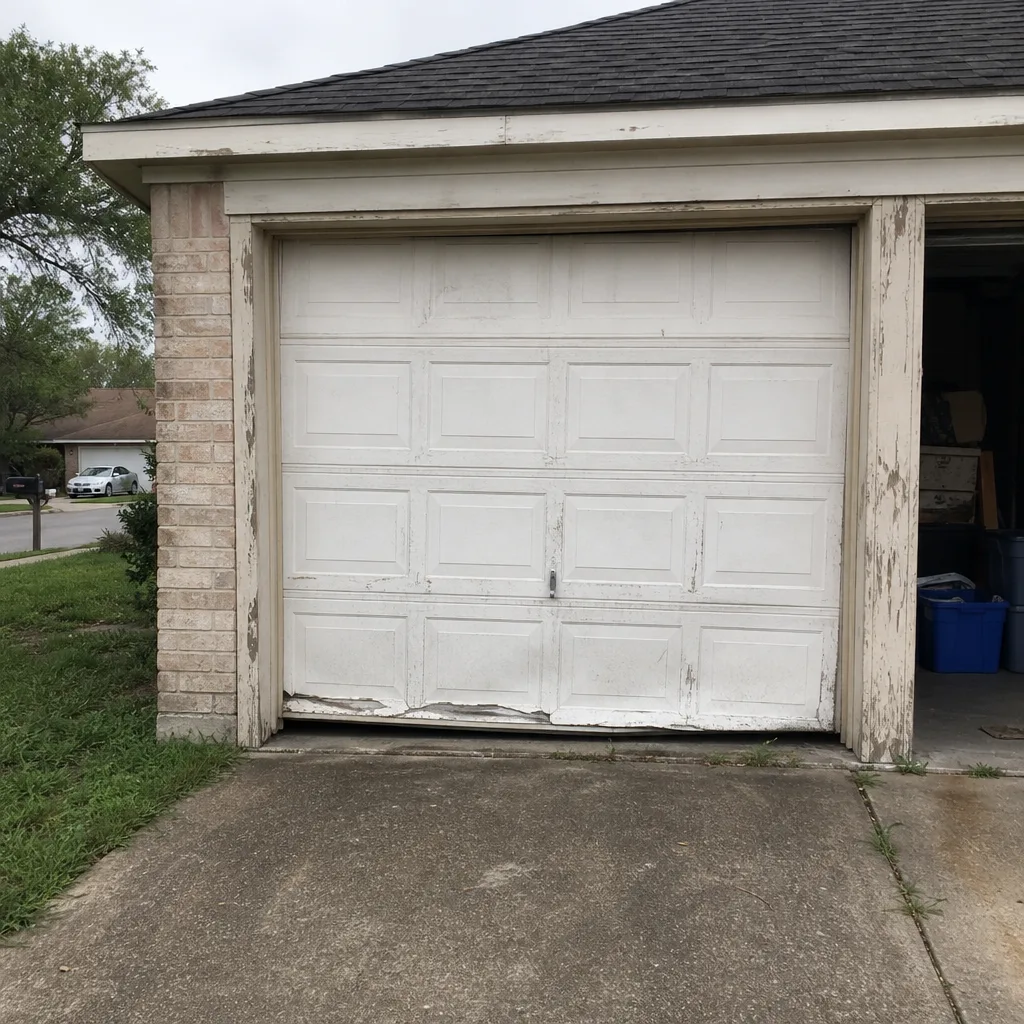 Before
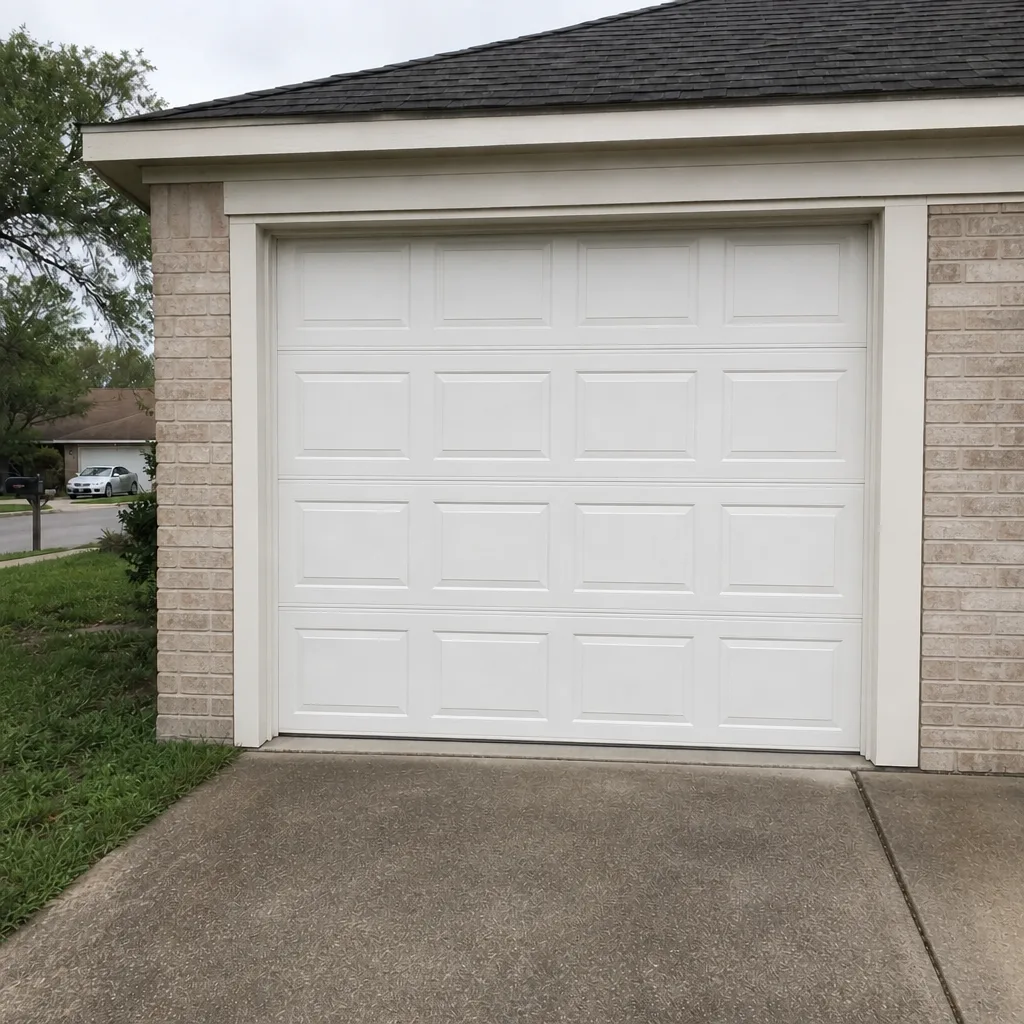 After
When to Call a Professional
Call a professional when the task involves a torsion spring, an extension spring, a cable, a bent track, or an opener gear. Call immediately when the door is stuck open (a security risk), stuck closed (you can’t get your car out), or has come off its tracks (a falling hazard). If you’re not sure, call – the diagnosis is free at Pearland Garage Door Repair Pros, and the written estimate comes before any work starts. Emergency garage door service is a core part of what we do, not an upsell added to the end of the call. Whether it’s a broken spring, a failing opener, or a full replacement, we handle the work that needs a trained hand. Call (844) 956-5614 for a free estimate in Pearland.
Frequently Asked Questions
It’s physically possible, but it’s the one garage door task we’d strongly advise against. Torsion springs store enough mechanical energy to cause serious injury, and the failure is instantaneous – there’s no partial save if a winding bar slips. The cost of a spring replacement is far less than the cost of a hospital visit or a bent door, so this is a job for a trained technician. Call (844) 956-5614 for a free estimate.
Spring repair pricing depends on whether you have one spring or a matched pair, the spring’s size, and the door’s weight. A written estimate is the only way to know for your specific door. Pearland Garage Door Repair Pros quotes before any work starts, so the number you agree to is the number you pay. Call (844) 956-5614 for an exact quote – estimates are free.
It depends on the manufacturer and the specific component, but most door and opener warranties exclude damage from homeowner service of covered components, especially springs and cables. If your door was installed recently, check the installer’s labor warranty too. A homeowner repair during the coverage window can void the labor coverage even if the parts warranty survives. We can work with your insurer on the repair side, but the warranty question is between you and the manufacturer.
Emergency garage door service is a listed core offering, so we’re set up to respond when a door can’t wait. A door stuck open is a security issue, and a door stuck closed leaves you without your car. Call (844) 956-5614 and we’ll book you for the earliest available slot – we can’t promise an hour, but we will tell you what’s available.
The difference is diagnosis, warranty, and risk. A specialist diagnoses the specific brand and model – whether that’s an Amarr door with matched panel weights or a Craftsman opener with a worn gear – rather than applying a generic fix. They also carry the training to handle tensioned components safely and the documentation to preserve your warranty. For safe tasks like weatherstripping and lubrication, DIY makes sense. For the rest, it doesn’t.
The local professionals we connect you with are licensed and insured as their state requires, and our technicians have up to 10 years of experience across the major door and opener brands. We work on LiftMaster, Chamberlain, Genie, Clopay, Amarr, Wayne Dalton, Craftsman, and Raynor systems specifically, so the diagnosis matches the equipment on your door. Call (844) 956-5614 for a free estimate.
The Bottom Line
The DIY vs professional decision on a garage door is a risk question, not a money question. Handle the safe tasks yourself: lubrication, weatherstripping, sensor alignment, and visual inspection. Those are cheap, quick, and low-risk, and doing them regularly is the best thing you can do for your door. Everything that touches stored tension – springs, cables, tracks, and opener gears – belongs with a trained technician, because the failure mode is instantaneous and the injury is real. In Pearland’s humid summers, that line matters more, not less. If you’re not sure which side of it a task falls on, call and ask. Pearland Garage Door Repair Pros offers a free written estimate before any work starts. Call (844) 956-5614 today.
Written by the team at Pearland Garage Door Repair Pros.