Last updated November 21, 2026
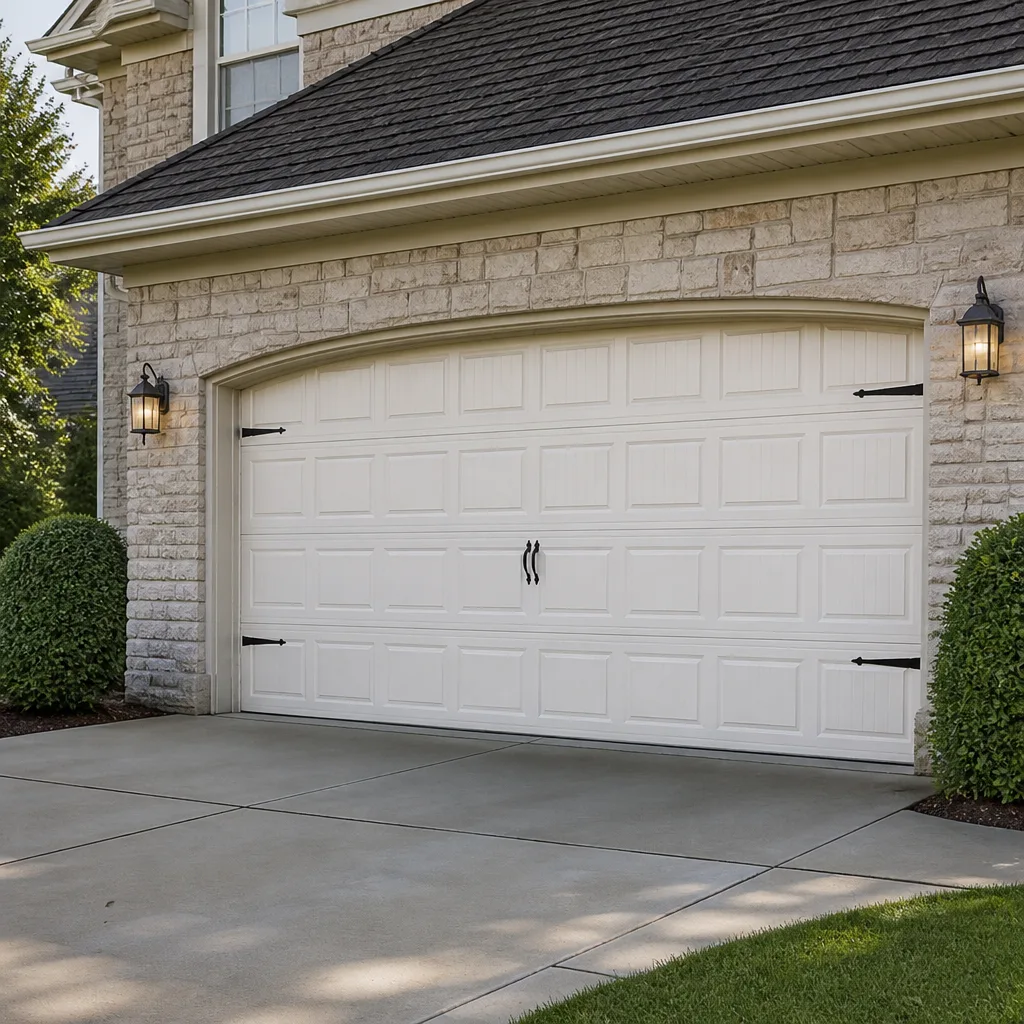 Raised-panel steel
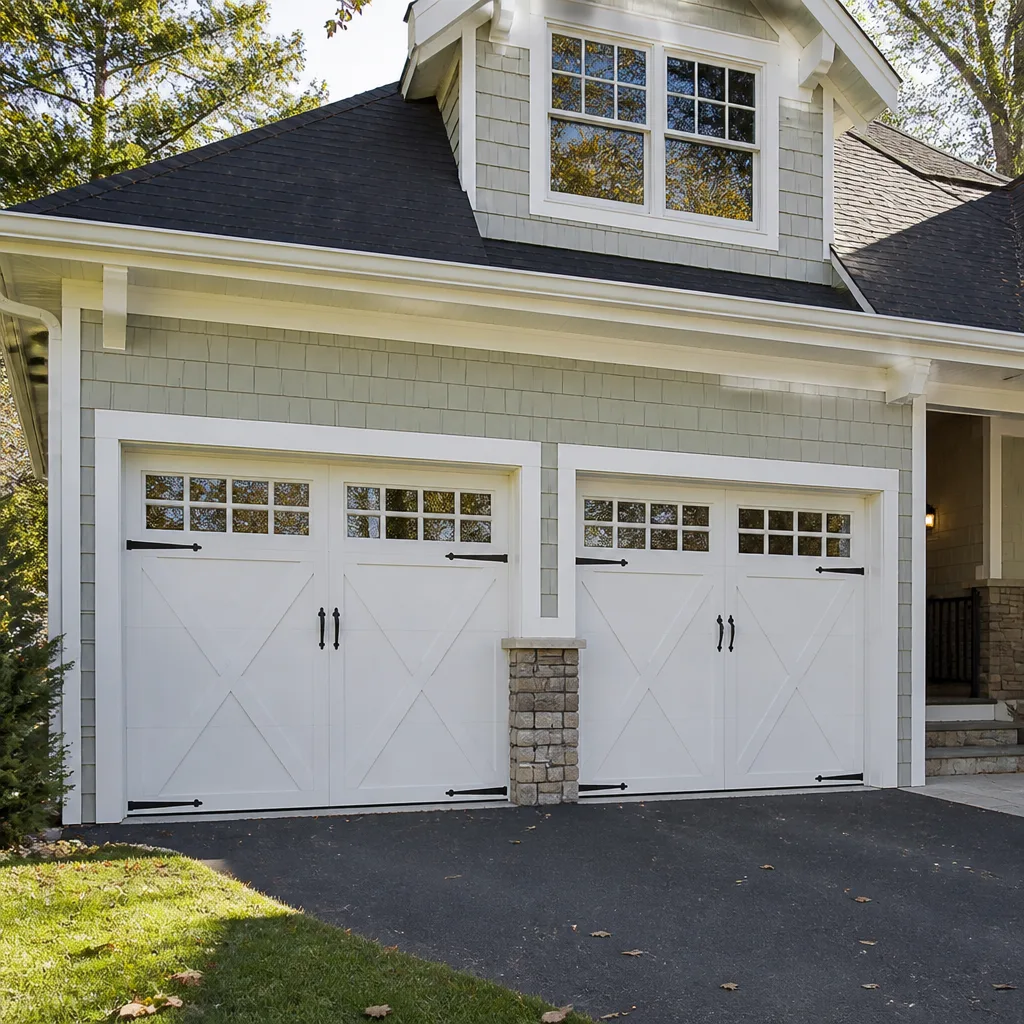 Carriage house
 Modern flush
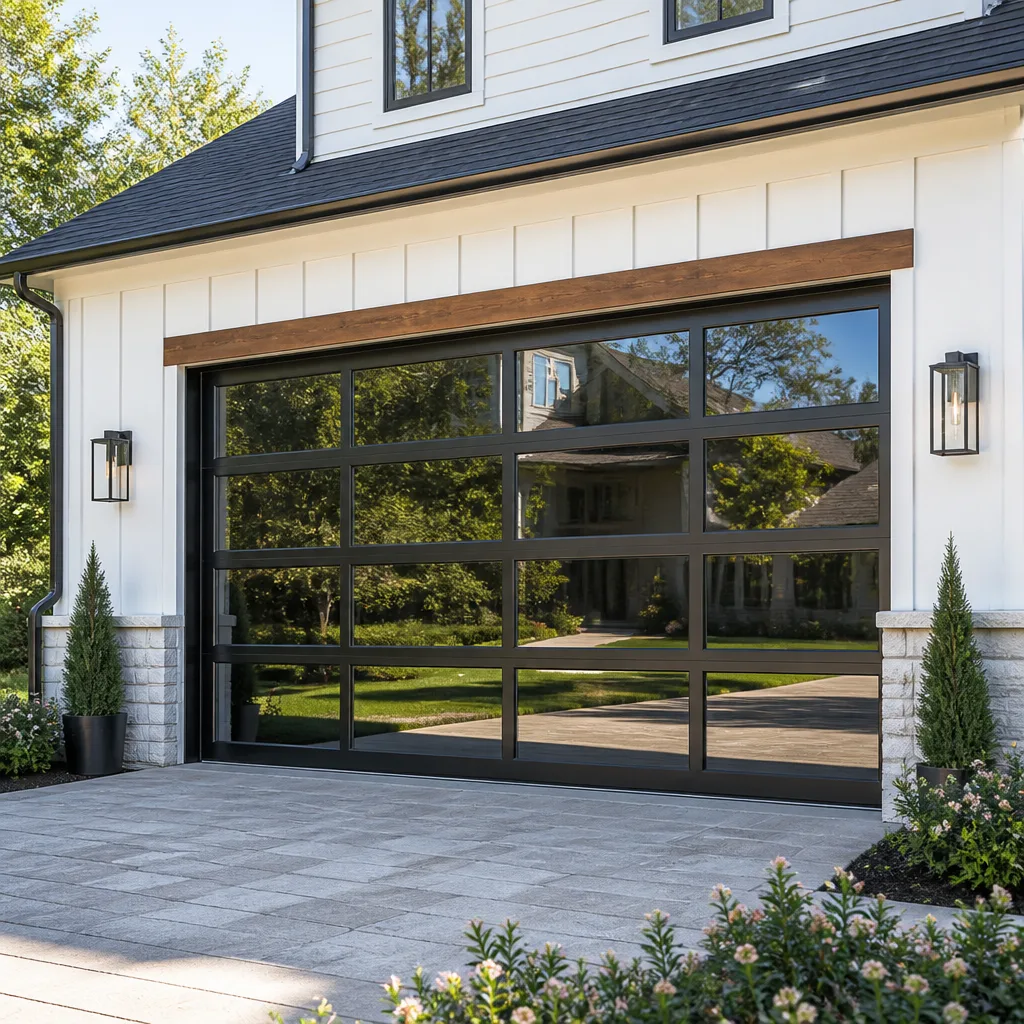 Full-view glass
 LiftMaster openers
 Chamberlain openers
Full 25-point door and opener safety check with every visit - springs, cables, rollers, tracks, and your LiftMaster or Chamberlain opener included
You get a price before we start. It does not change when the pro arrives.
Get your free estimateHow to Hire a Garage Door Contractor in Pearland: A Step-by-Step Guide
Texas doesn’t issue a state license specifically for garage door technicians. That single fact changes how you should shop for a contractor in Pearland. The person who quotes your torsion spring replacement may have learned the trade last month on a video, and nothing on paper will say so. Most homeowners find this out too late, usually after a return visit or an invoice that grew once the door was already off its tracks. This guide gives you the exact questions to ask, the insurance details worth checking, and the red flags that show up in the Pearland and Houston market. By the end you’ll know how to tell a real garage door specialist from a general handyman who lists doors on the side.
Quick Answer
Hiring a garage door contractor in Pearland means verifying three things before anyone touches your door: real brand-specific experience (not general handyman work), an itemized written quote that separates parts from labor, and proof that the contractor carries general liability coverage and is bonded. Ask how they diagnose your specific door and opener brand, get the quote in writing before work starts, and walk away from anyone who quotes a spring over the phone without inspecting it.
Styles & brands we work with
- Raised-panel steel
- Carriage house
- Modern flush
- Full-view glass
- LiftMaster openers
- Chamberlain openers
Table of Contents
- Why Hiring a Garage Door Contractor in Pearland Is Different
- The Questions That Separate Specialists From Generalists
- How to Verify Insurance That Actually Covers Garage Door Work
- Red Flags in the Pearland and Houston Market
- How to Read a Garage Door Quote Line by Line
- Brand-Authorized Dealer vs. Independent Technician
- Pearland Climate and Housing: What It Means for Your Door
- Spring Work Is Not a Do-It-Yourself Job
Why Hiring a Garage Door Contractor in Pearland Is Different
Most home-service companies in the Pearland area handle several trades. Garage doors are one line item among HVAC, plumbing, and odd jobs. That breadth looks convenient until a spring fails, because the same technician who unclogged a drain last week may be the one diagnosing a torsion system this week.
A garage door is a balanced mechanical system. Springs, cables, drums, hinges, rollers, and the opener all work together, and a mistake in one causes failures in the others. A generalist can swap a hinge. Diagnosing why a door reverses before it closes, or why it sags on one side, takes someone who works on these systems daily.
Pearland adds a twist. The area grew fast, and much of its housing went up in a short window. Many homes here have doors and openers installed around the same period, which means similar wear patterns and similar failure points across neighborhoods. A contractor who works in Pearland regularly has seen your door’s generation of equipment before. One who doesn’t is guessing.
This is the core of our approach at Pearland Garage Door Repair Pros: garage doors are the only trade we work in. No HVAC, no plumbing. Every job, every tool, and every diagnostic conversation stays in one lane. That focus is what makes the questions in this guide worth asking.
The Questions That Separate Specialists From Generalists
You don’t need technical knowledge to screen a contractor. You need to ask questions a real specialist answers easily and a generalist fumbles. In our experience, five questions do most of the work.
- “What spring system does my door use, and how can you tell?” A specialist will mention torsion or extension and describe how they check the counterbalance before quoting. Someone who just says “we’ll replace the springs” hasn’t looked closely enough.
- “Do you work on my opener brand specifically?” Ask about yours by name. Specialists work across the major platforms, from LiftMaster to Genie, and they’ll talk about brand-specific quirks, like how a particular model handles safety sensors or travel limits. A generalist gives a blank look or a vague answer.
- “How do you test the door’s balance before you leave?” The right answer involves disconnecting the opener and checking how the door holds at the halfway point. If the reply is “we open and close it a few times,” that’s a red flag.
- “Will you itemize parts and labor separately?” Specialists itemize. Generalists quote a flat number and hope you don’t ask what’s inside it.
- “What happens if the door still isn’t right after the repair?” A focused contractor stands behind the work and can explain their return-call policy in plain language. A generalist shifts the blame to the door.
Notice what these questions have in common: they ask for reasoning, not just a price. A specialist thinks out loud. A generalist recites a script. If the person on the phone can’t explain a torsion spring without hesitating, that tells you plenty.
How to Verify Insurance That Actually Covers Garage Door Work
Here’s a detail most homeowners miss: “general liability” sounds reassuring, but it doesn’t automatically protect you. It protects the contractor from certain claims. What matters for your garage door is whether the coverage applies to the type of work being done. A policy written for a handyman business may not clearly cover garage door installation or spring replacement.
Ask for a certificate of insurance and read it, don’t just accept a verbal “we’re insured.” Specifically check for:
- General liability coverage that names the work as garage door repair and installation, not just general contracting.
- A bond, which is separate from insurance. Insurance covers damage; a bond is a form of protection against a contractor who takes your deposit and disappears. Ask if they’re bonded and get it in writing.
- Workers’ compensation, which matters if a helper gets hurt on your property. Without it, you can get pulled into the problem.
Now connect this to why licensure doesn’t save you here. Because Texas doesn’t license garage door technicians, there’s no state board to check and no license number to verify. Insurance and bonding become your primary verification tools. A contractor who resists showing either one is telling you something.
At Pearland Garage Door Repair Pros, the local professionals we connect you with are licensed and insured as their state requires, and they can walk you through their coverage. We treat this as a fair question, not an insult. Anyone who works on your home should expect to answer it.
Red Flags in the Pearland and Houston Market
Garage door work attracts shortcut artists because the parts are expensive and homeowners rarely know what a fair price looks like. The Houston metro market is no exception. Watch for these patterns.
Phone quotes for spring replacement. A spring job involves size, wind, cycle rating, and cable condition, and none of that can be confirmed without looking at the door. Anyone quoting a spring price over the phone without an inspection is guessing. The number that matters is the written one after an inspection.
Upselling one spring when two are matched. Springs are usually installed in pairs and wear at the same rate. A contractor who replaces only one side when the other is equally worn is setting up a second visit. Make sure the quote explains why one or two springs are needed.
Vague “service and adjustment” charges. That line can hide anything. Ask exactly what gets adjusted, tested, and replaced.
Pushy replacements. A worn door sometimes warrants a full replacement, and sometimes a repair fixes it for far less. A contractor who leads with the big number before diagnosing the small one is selling, not repairing.
No written estimate before work begins. Price should be quoted and agreed before anyone turns a wrench. That protects you and it’s a sign the contractor has nothing to hide.
Vanishing after the deposit. A downpayment before any work should come with a written schedule and a clear return policy. If both are missing, keep looking.
How to Read a Garage Door Quote Line by Line
A good quote tells you exactly what you’re paying for. Here’s how to read one so nothing stays hidden.
- Parts, itemized. Springs, cables, rollers, hinges, and any opener components should each appear with the specific part and quantity. “Miscellaneous parts” is a line item that hides money.
- Labor, separated. Labor should be its own line, not baked invisibly into a parts markup. That way you can see what the technician is charging for the work itself.
- Diagnosis and inspection charges. Some contractors charge for the service visit. That’s fair as long as it’s stated up front and credits toward the job.
- Cycle rating on springs. Springs come in different cycle ratings, which measure expected life. A cheap spring wears out faster. The quote should say what rating you’re getting.
- Opener parts and model numbers. If the opener is involved, the quote should name which unit or component is being replaced. Written vaguely, it could be a generic part with a branded price.
- A lifetime or workmanship statement. The quote should say what the contractor guarantees and for how long. Ask if you don’t see it.
If the door and opener both need attention, the quote may combine garage door repair and garage door opener repair in a single visit. That’s efficient, as long as each piece is itemized separately.
Finally, ask the one question that ends the guessing: “Is this the number I’ll pay, or could it change once you’re working?” A written estimate sets the final price. If the technician finds something else once the door is open, ask for a revised quote before work continues. Never accept a verbal change to a written number.
Brand-Authorized Dealer vs. Independent Technician
Some garage door work benefits from an authorized dealer, and some doesn’t. Knowing the difference keeps you from overpaying or under-verifying.
A brand-authorized dealer is factory-approved to sell and install a specific manufacturer’s products. If you buy a new door or opener under warranty, an authorized installer can be the difference between a warranty that holds and one that gets denied because unapproved parts were used. For a full replacement, a dealer route is often the safest bet.
An independent technician, meanwhile, works across brands. Our technicians are trained across eight of the most widely installed residential platforms, including Craftsman, Raynor, and LiftMaster. That breadth matters for repair, where the job is diagnosing the exact system on your door and fixing it correctly, not selling a new unit from one manufacturer’s catalog. A single-brand dealer is great at their brand. An independent specialist is fluent in the door in front of them.
When the choice actually matters:
- Warranty on a new door or opener: dealer or authorized installer route.
- Spring, cable, roller, or hinge repair: independent specialist with brand familiarity.
- Opener repair on an older model: whoever works on that platform regularly, dealer or not.
- Emergency fix, stuck door: whoever can respond and knows your system.
Ask either type of contractor the same screening questions from earlier. Authorization tells you about a manufacturer relationship. It doesn’t replace verifying insurance, experience, and clear pricing.
Pearland Climate and Housing: What It Means for Your Door
Pearland’s weather is hard on garage doors in a specific way. Long stretches of heat and humidity are the norm, and the region swings between dry spells and heavy rain. Winters stay mild, so cold-weather damage isn’t the story here. Heat and moisture are.
Heat causes metal to expand and can dry out lubricants, leaving tracks and rollers noisier and harder to move. Humidity works on the wood or composite parts of a door and on the metal hardware, encouraging rust and stiff hinges. The result is a door that needs more consistent lubrication and adjustment than one in a drier climate.
Pearland’s housing stock plays a role too. Neighborhoods across the area, from established blocks to newer subdivisions, often have doors and openers of similar ages. When one house nearby needs a spring replaced or an opener diagnosed, odds are neighbors are close behind. A contractor active in Pearland has seen that pattern and knows the equipment common to the area.
What this means for hiring: ask a contractor how they handle heat-driven wear and seasonal moisture. If they recommend a lubrication and balance check as routine, that’s local knowledge talking. If they treat it as optional, they may not really work in this climate often.
Spring Work Is Not a Do-It-Yourself Job
A torsion spring under tension holds thousands of pounds of force, and it can release that force in an instant. This is the single most dangerous component on a garage door, and it’s also the one homeowners most often try to tackle. Please don’t. We say that as a safety matter, not a sales pitch.
A few things worth knowing about how spring work goes, without walking you through the steps:
- Springs must match the door’s weight, size, and usage. A wrong spring fails early or damages the opener.
- The system must be de-tensioned safely before any part is touched, which takes specific tools and training.
- Cables and drums are part of the same system. A spring job that ignores cable condition can leave you with a new spring and a broken cable.
If your spring has already broken, the door may be stuck shut or stuck open. Don’t force it. A door with a failed spring can come down hard, and the opener isn’t designed to lift a door whose spring has let go. Call a professional and leave it alone until someone trained arrives.
Spring replacement is one of the most mishandled jobs in the trade, and it’s exactly where a generalist’s limits show. Our team handles dedicated garage door spring repair as its own service, which is the level of focus this component deserves. Check our technician experience: our technicians have up to 10 years of experience working specifically on garage door systems.
Common Mistakes to Avoid
- Hiring the lowest phone quote without an inspection. A number quoted over the phone without seeing the door is meaningless, especially for spring work. Two sentences later, that “quote” becomes the start of an upsell.
- Skipping the insurance check because Texas has no license to verify. With no state license board to check on, insurance and bonding are your only paper trail. Homeowners who skip this step have no recourse if something goes wrong.
- Replacing one spring when the pair is worn. Springs installed together wear together. Insisting on a single replacement now often means a second service call sooner than you’d like, and the worn spring is already a risk.
- Accepting vague line items. Charges like “service and adjustment” or “miscellaneous parts” hide markup. A quote that doesn’t itemize parts and labor isn’t a quote, it’s a guess with a price attached.
- Forcing a door with a broken spring. Dragging it open by hand, or letting the opener strain to lift it, can damage the opener and put you near cables under tension. Leave it and call a professional.
- Ignoring brand differences in repair. A generalist who treats every opener the same misses model-specific issues. Diagnosing a LiftMaster or a Genie system properly takes brand familiarity, not a generic fix.
- Not asking what happens if the repair fails. A contractor who can’t explain their return policy in plain language is telling you they don’t have one worth relying on.
See the difference
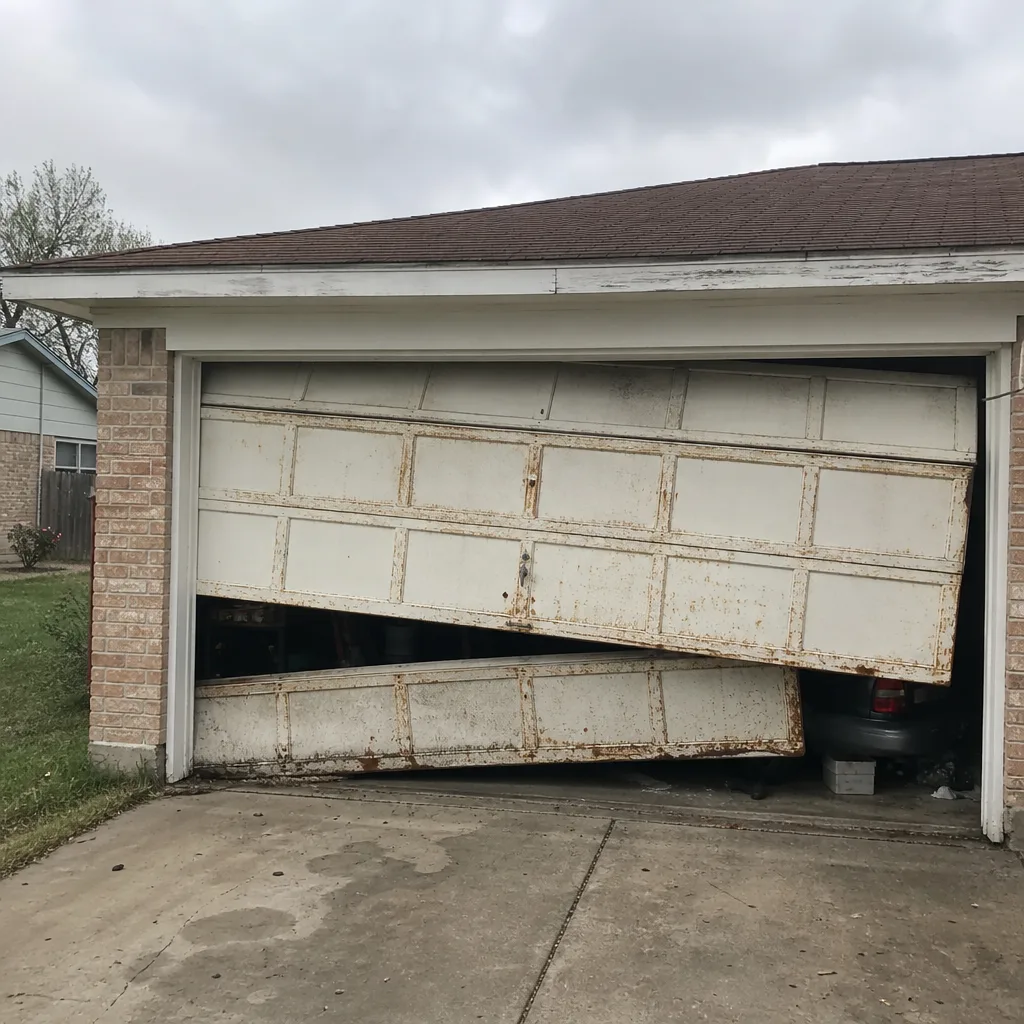 Before
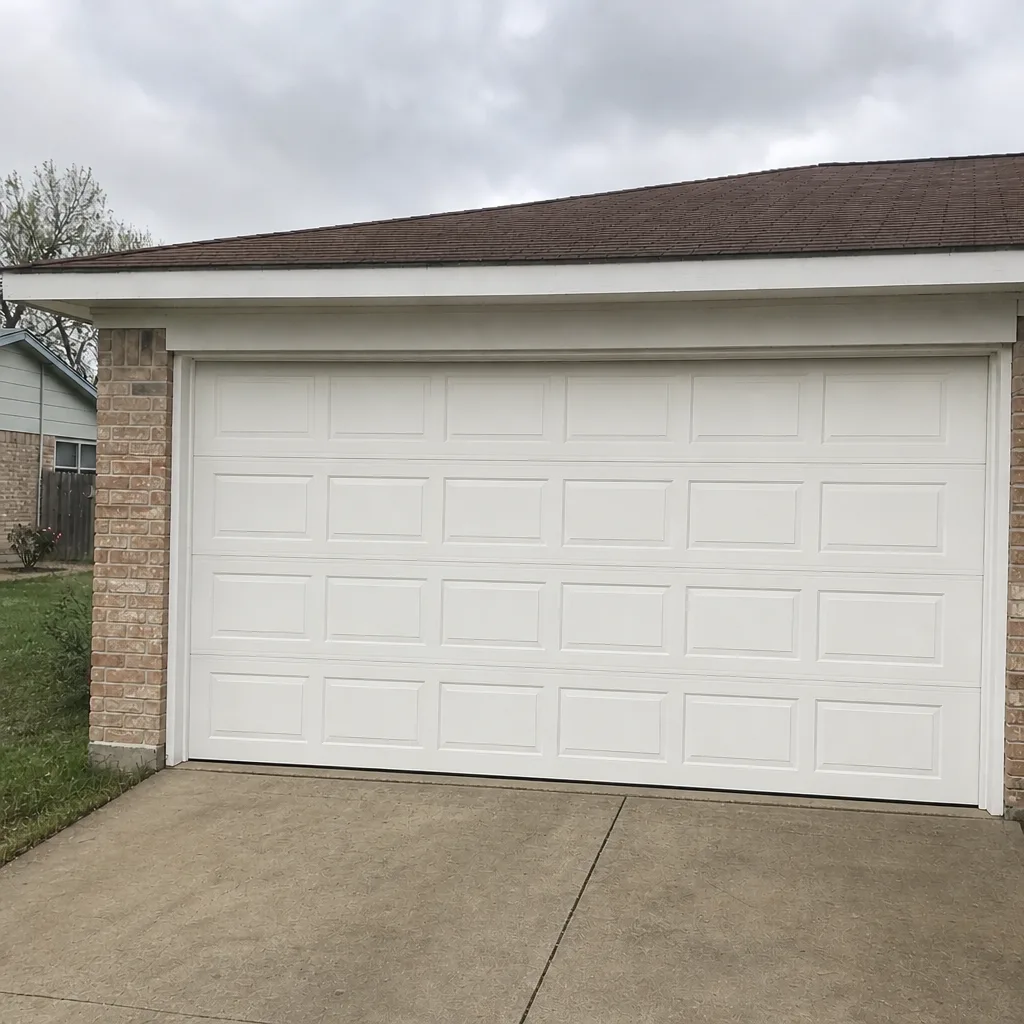 After
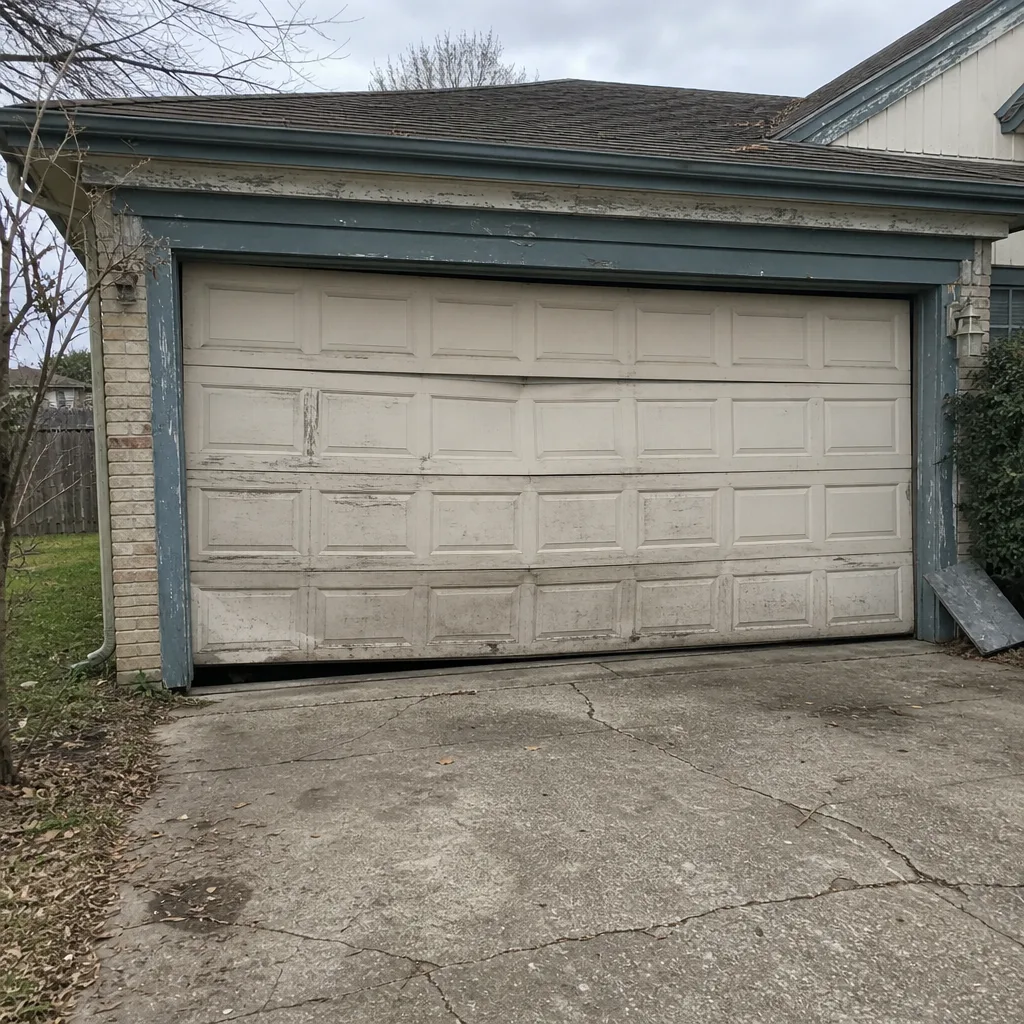 Before
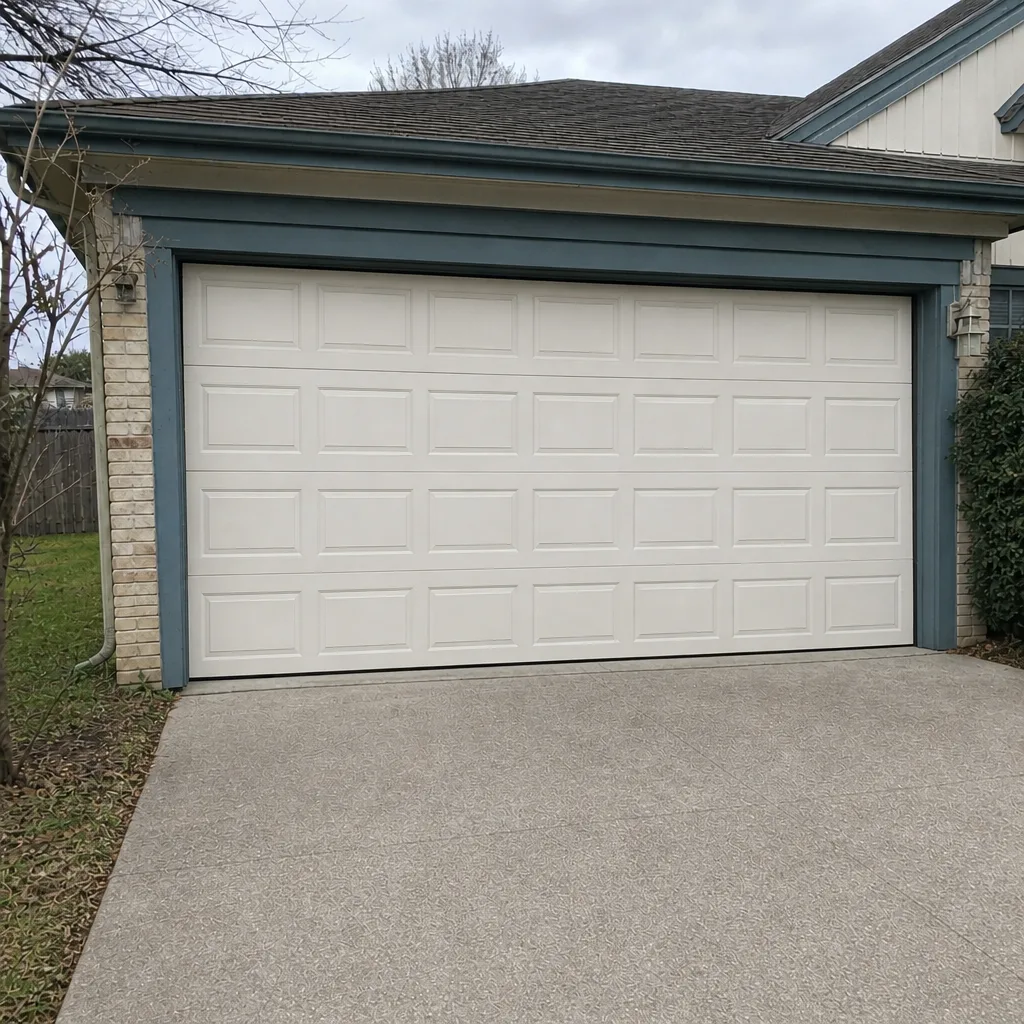 After
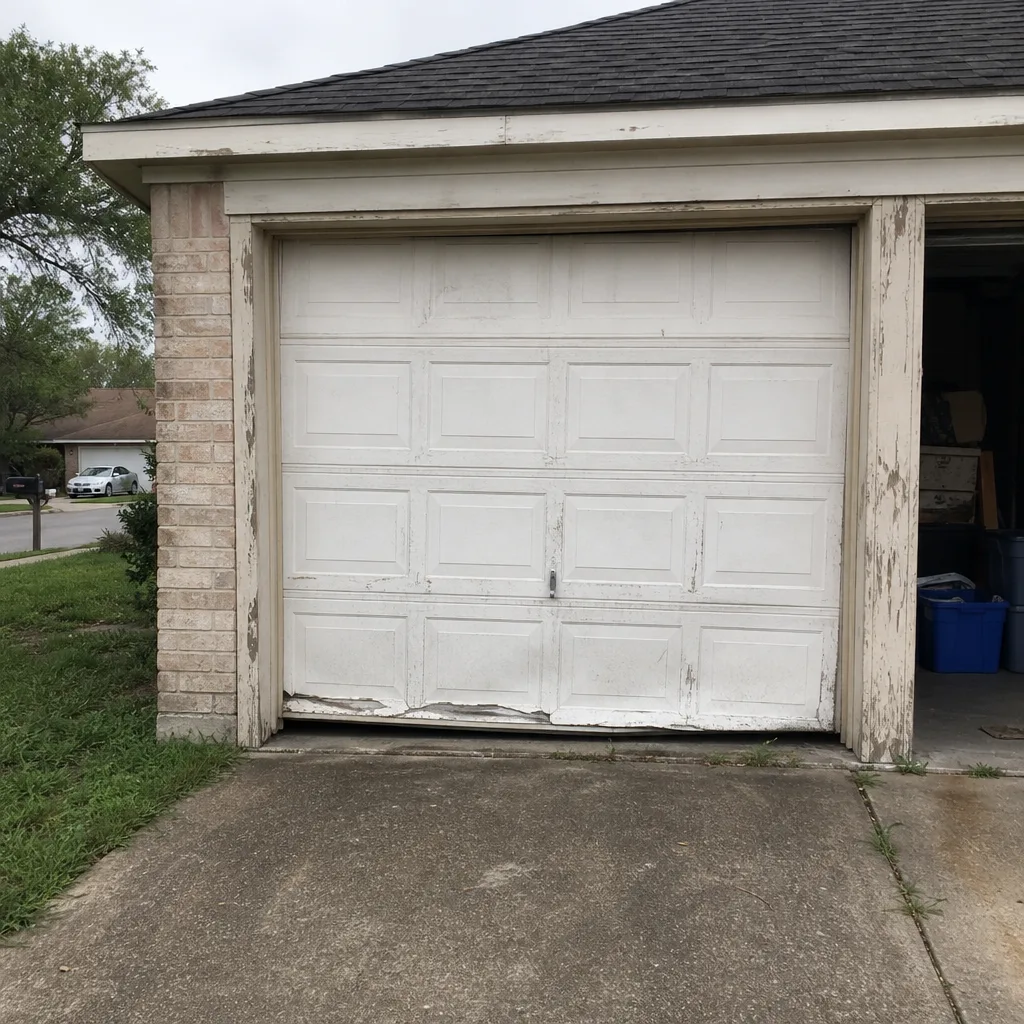 Before
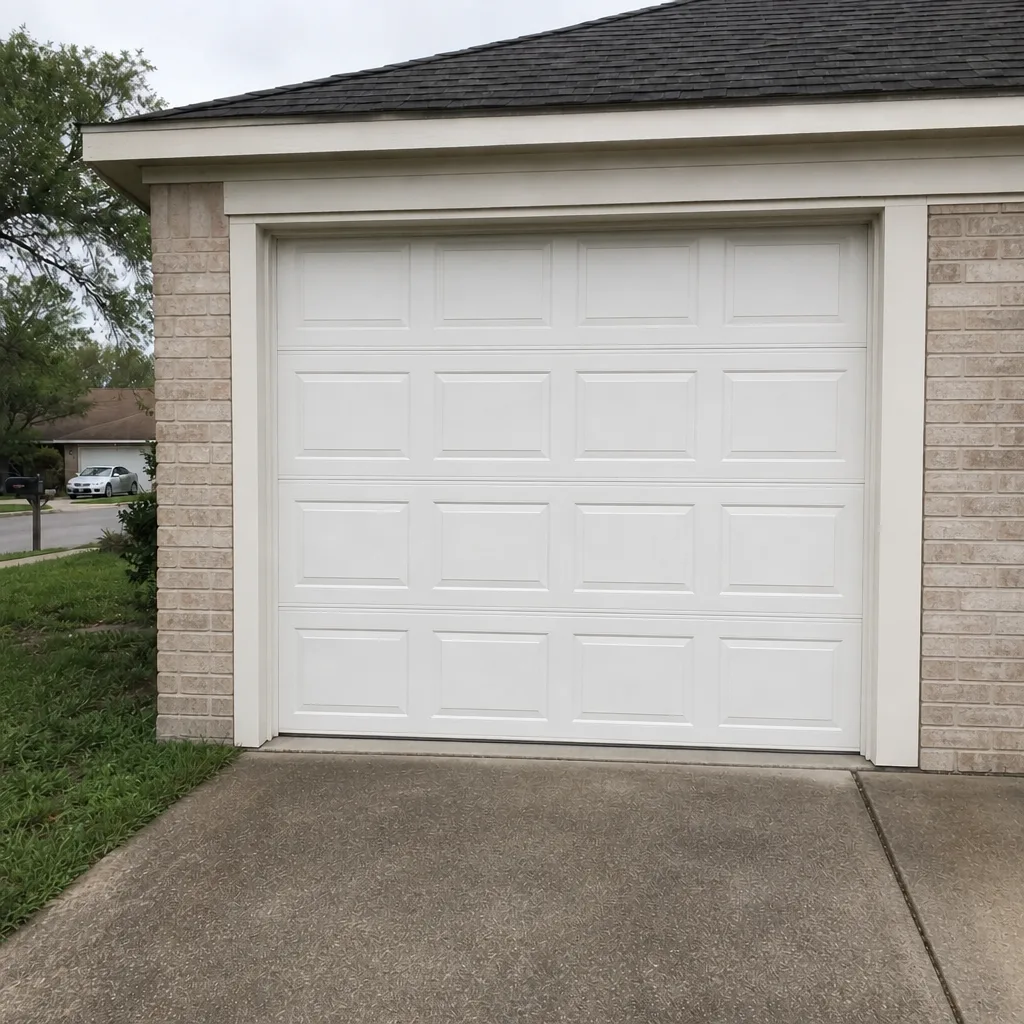 After
When to Call a Professional
Some garage door situations clearly need a trained technician, and it helps to know which ones. Call a professional if the door is stuck open or stuck closed, if a spring has broken, if the door reverses or comes down unevenly, if the opener runs but the door won’t move, if you hear a loud snap, or if the door presents a security concern. Emergency service exists for exactly this, and Pearland Garage Door Repair Pros offers it for situations that can’t wait. If the door fails on a Saturday, we’re closed that day, but call and we’ll book you for Sunday. For routine repairs, our free estimates in Pearland make it easy to get a straight number before you commit. Call (844) 956-5614 to start the conversation.
Frequently Asked Questions
Texas doesn’t require a state license for garage door technicians, so there’s no license to verify through a state board. Instead, check for general liability insurance, bonding, and clear brand experience. Ask for proof in writing before work starts. A contractor who works in Pearland should be glad to provide it. Call (844) 956-5614 for a free estimate.
Costs depend on what’s failed and what parts your door uses, so the only reliable number is a written estimate after an inspection. Spring work, opener repair, and replacement hardware each price differently. Ask for an itemized quote that separates parts from labor. Call (844) 956-5614 for a free estimate, and the written quote sets the final price.
Often yes for repair calls, depending on the day and the parts needed. Emergency service is a core part of what we offer for stuck doors, broken springs, and security concerns. Since we’re closed Saturdays, a Saturday failure gets booked for Sunday. Call (844) 956-5614 to check availability. Estimates are free.
Ask about your brand by name and listen for specifics. A specialist works across the major platforms, from Wayne Dalton to Genie, and can talk about model-specific issues without hesitation. A generalist can’t fake that. Call (844) 956-5614 and tell us what’s on your door.
It shouldn’t. The written estimate is the price, and any change should be discussed and agreed before work continues. A contractor who adds charges without your sign-off is a problem. Get it in writing up front. Call (844) 956-5614 for a free estimate.
In Texas there’s no garage door license to hold, so the meaningful answer is whether the contractor is insured and bonded as the state requires. The local professionals we connect you with carry that coverage, and you can ask for proof. Call (844) 956-5614 to talk through the details.
The Bottom Line
No state license for garage door technicians means the burden falls on you, and that’s fine once you know what to check. Ask the five screening questions and listen for reasoning, not a script. Verify insurance and bonding in writing. Get an itemized quote with parts and labor separated, and treat that written number as the final price. Watch for phone quotes on springs and vague “adjustment” lines. Spring work is dangerous and belongs in trained hands. Whether you need a repair or a full replacement, hold every contractor to these standards, and the specialist will be obvious. Written by the team at Pearland Garage Door Repair Pros.