Last updated November 21, 2026
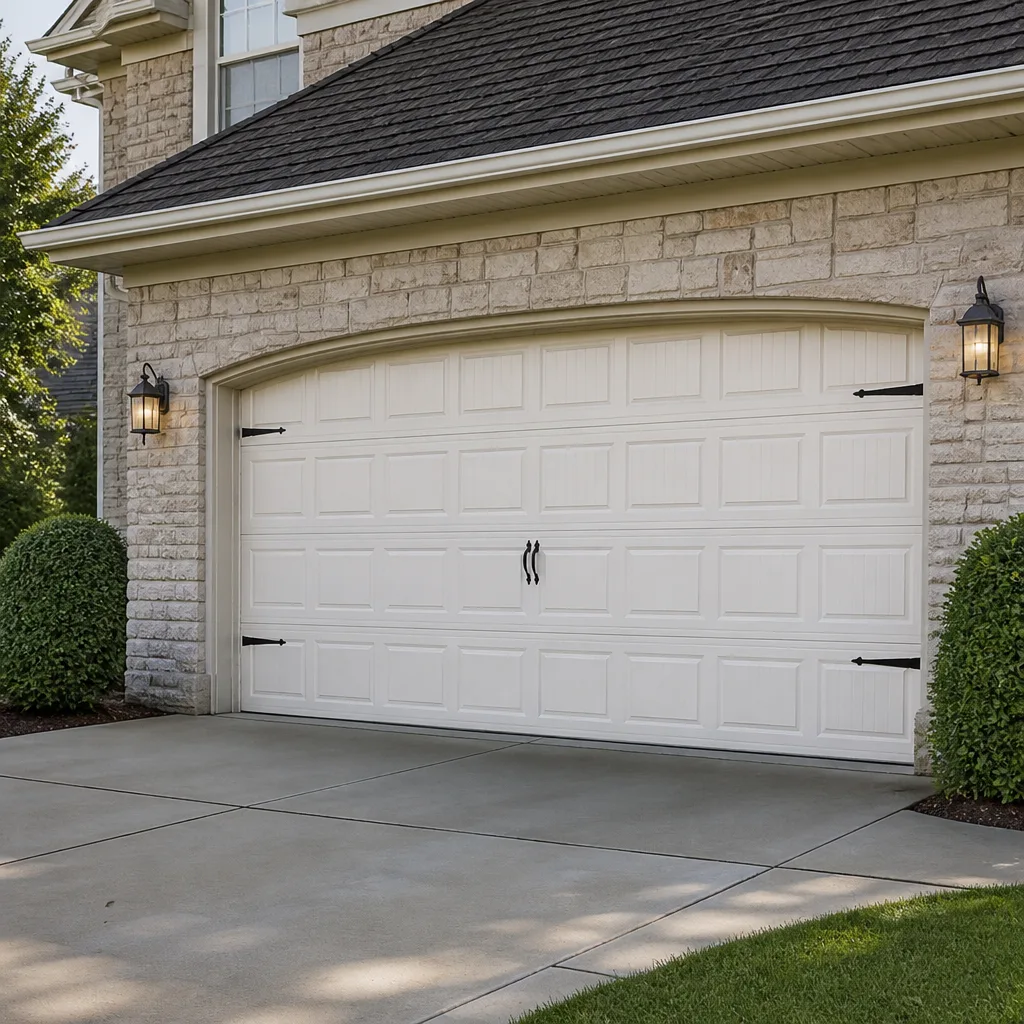 Raised-panel steel
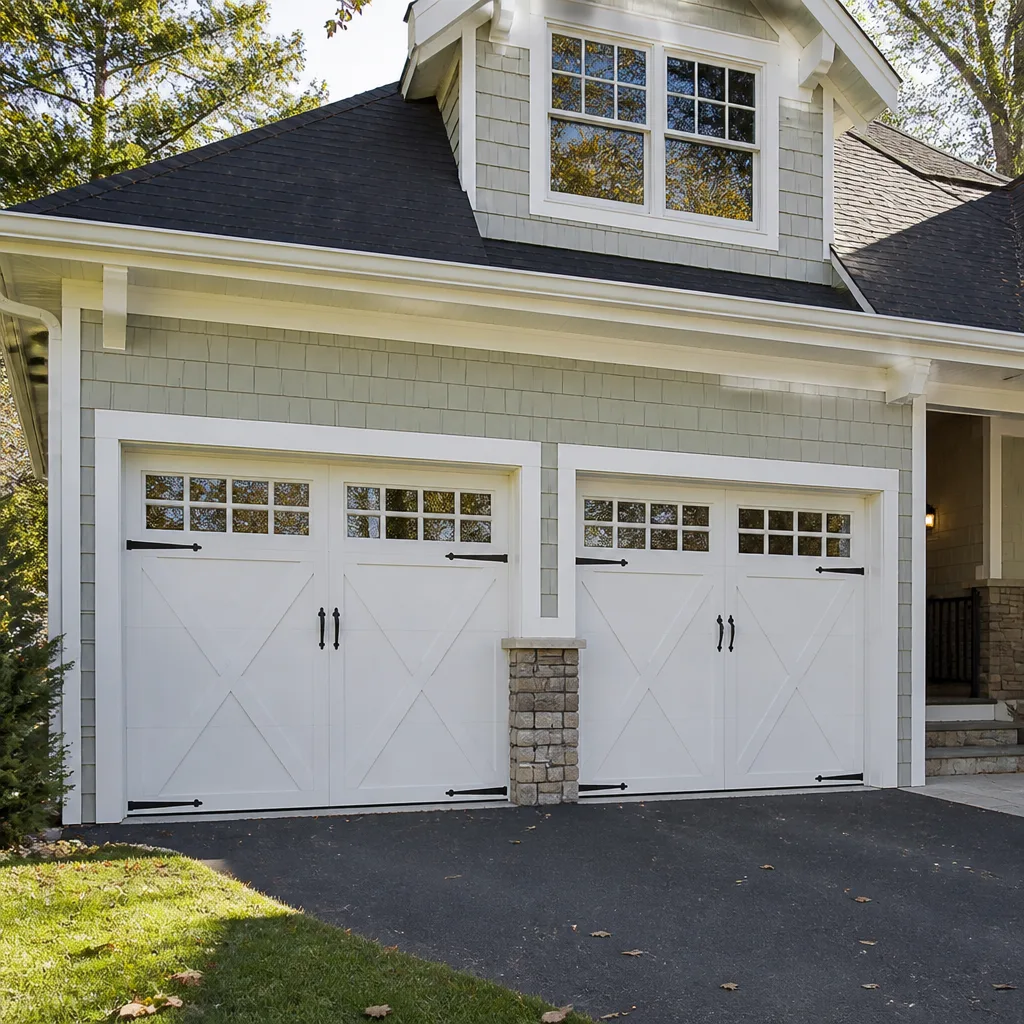 Carriage house
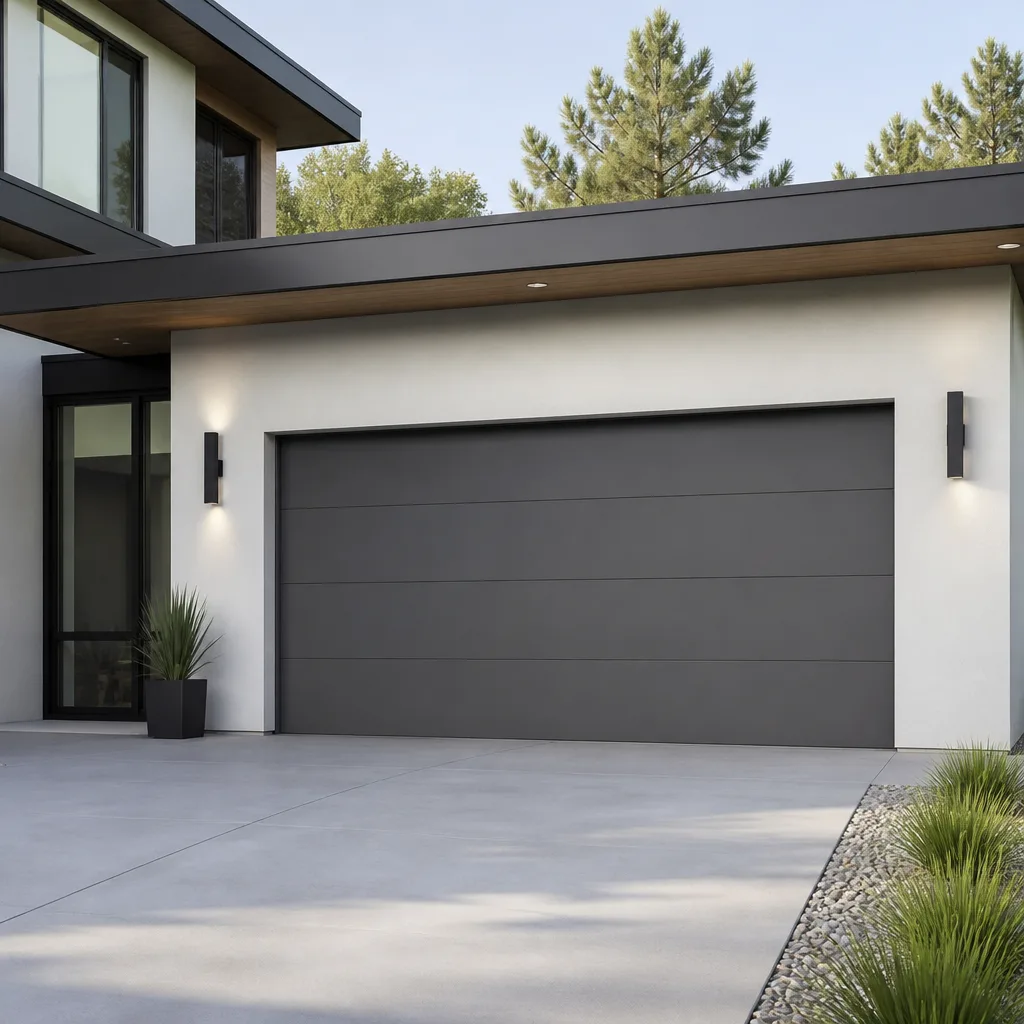 Modern flush
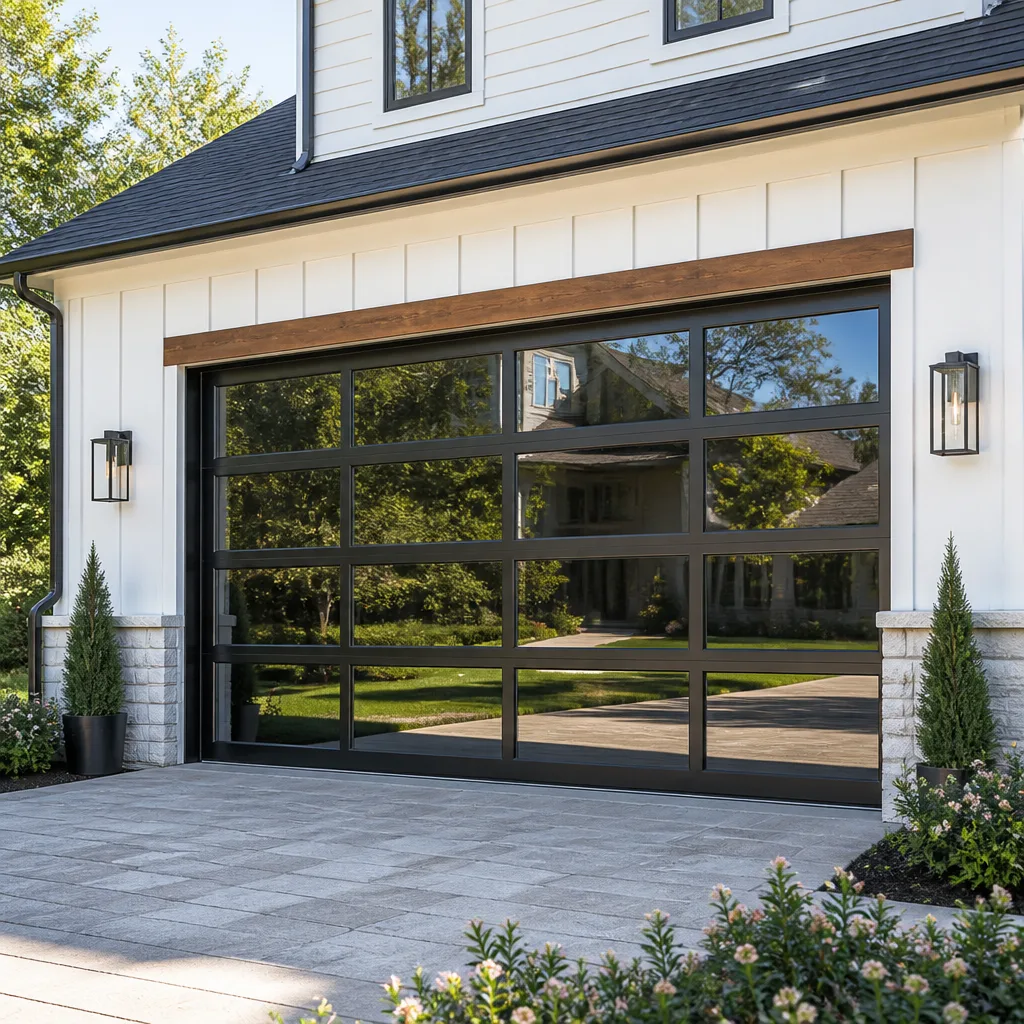 Full-view glass
 LiftMaster openers
 Chamberlain openers
Full 25-point door and opener safety check with every visit - springs, cables, rollers, tracks, and your LiftMaster or Chamberlain opener included
You get a price before we start. It does not change when the pro arrives.
Get your free estimateGarage Door Warning Signs: A Pearland Homeowner’s Reference Guide
A garage door doesn’t just break. It telegraphs the failure in advance through sounds, movement patterns, and visual changes that have specific mechanical meanings. Most homeowners notice the signal but misread it. They hear a soft click above their head, a slight shudder near the top of the track, a roller with a hint of orange dust around the bearing, and they file it away as “it’s still working.” Then a cable snaps on a Tuesday morning and the door comes down crooked and loud. Knowing which signs mean “watch it” and which mean “stop using the door now” is the difference between scheduling a repair and making an emergency call. This guide is written from Pearland, where heat and humidity push certain worn parts toward failure faster than most homeowners expect.
Quick Answer
The earliest garage door warning signs are almost always subtle: a new sound during the up or down cycle, a slightly uneven door, a roller that runs rougher than it did a month ago, or rust-colored dust around the bearings. Signs that mean stop using the door immediately include a visibly bent or twisted track, a cable that has jumped its drum or shows frayed strands, a door that hangs unevenly with one side higher than the other, and a torsion spring with a visible gap in the coil. Those four situations mean a spring or cable is at the edge of failure, and continuing to run the door can send heavy hardware falling or swinging where someone is standing.
Styles & brands we work with
- Raised-panel steel
- Carriage house
- Modern flush
- Full-view glass
- LiftMaster openers
- Chamberlain openers
Table of Contents
- What Each Garage Door Sound Is Telling You
- Visual Signs on Springs, Cables, and Rollers
- Movement Patterns That Point to Specific Components
- The “Stop Using the Door Now” Threshold
- How Pearland Heat and Humidity Speed Up These Signs
- Signs That Show Up Differently by Opener and Door Brand
- How to Describe What You’re Seeing to a Technician
- What Garage Door Repairs Typically Cost in Pearland
What Each Garage Door Sound Is Telling You
A garage door has a narrow vocabulary of sounds, and each one maps to a specific wear point. If you can describe the sound accurately, you’re already halfway to a diagnosis. Here’s what each one physically means, in the order we most often hear them.
- Grinding. Metal-on-metal contact, usually a roller that has seized or has lost its nylon tire so the steel stem is scraping the track. Left alone, grinding turns into flat-spotted track and a door that jerks. Grinding is a “watch it and schedule it” sign.
- Popping or snapping. A loud pop during the up cycle, especially from above the center of the door, points at the torsion spring. That pop is the sound of a coil or two binding and releasing, or of the spring already sitting broken on its shaft (which is a “stop now” sign).
- Squealing or high-pitched whine. A dry bearing, a worn stem in a roller, or, on older doors, a failing opener gear. Squealing is usually a wear signal, not an emergency, but it’s the sound that most quickly becomes grinding if ignored.
- Banging, rumbling, or a heavy slap. A door that bangs on the way down is usually dropping too fast, which means a spring has lost tension or the opener’s travel and force settings are off. Banging is a functional issue and a safety concern on any door with children or pets around.
- A single click with nothing after. On an opener that won’t move, a click at the motor without door travel usually means the logic board or a safety-reversing sensor, not a spring. That’s the garage door opener repair side of the trade.
The most useful rule of thumb: a new sound is a signal. A sound that’s been there for months is often a sign the root cause has progressed. If a sound has changed volume or frequency in the last few weeks, that’s your cue to have it looked at.
Visual Signs on Springs, Cables, and Rollers
You don’t need to climb a ladder to spot most of these. Stand at the door with it closed and look at the hardware. Then run it up and look again. What you’re checking for:
- Torsion springs (the horizontal springs on the shaft above the door). Look for a clear gap in the coil about the width of a coin or wider. That gap means the spring is broken and is no longer helping lift the door. Also look for rust lines along the coil. Surface rust is normal, but heavy flaking rust means the spring is thinner than it used to be and carrying less load. A broken torsion spring is one of the most common reasons we’re called out for garage door spring repair.
- Extension springs (the long springs that run along the horizontal track on each side). Look for a spring that has stretched longer than the one on the other side, or for a spring that has clearly lost its tight coil pattern. Stretched extension springs are at the end of their life and should be replaced with a proper safety-cable-equipped setup.
- Lift cables. The cables run from the bottom brackets up to the drums above the door. Look for fraying (little wire hairs sticking out), a cable that has come off its drum, or a cable sitting at a different tension side to side. A cable with even a few broken strands is a stop-using signal.
- Rollers. Look for rollers with a flat spot on the nylon or steel tire, rollers with a visible crack, and rollers that have a small pile of rusty dust around the bearing. That dust is metal that used to be part of the bearing.
- Hinges and bottom brackets. Rust streaks, loose screws, or hinges starting to pull away from the door panel. Bottom brackets take the heaviest load on the door and are the one visual wear point we tell every Pearland homeowner not to touch themselves.
- Panels. A door panel that has a visible bend or a crease near a hinge point can throw the whole door off balance and is worth flagging before it damages the track.
Movement Patterns That Point to Specific Components
A garage door that closes fully can still be telling you that something’s wrong. Movement is one of the most reliable diagnostic signals, and most homeowners notice the change but assume “it’s just the door playing up today.” Match the movement you’re seeing to the component that owns it:
Uneven door (one side higher than the other)
If one side lags on the way up or sits lower on the way down, the cause is usually one of three things: a stretched or broken spring on one side (extension setup), a cable that has slipped on a drum, or a bent track. This is a “stop and call” sign on a torsion-spring door, because the torsion bar carries both sides and an uneven door means one cable is doing more work than the other.
Slow door
Slow travel almost always points to spring tension loss. When the springs that counterbalance the door lose force, the opener has to move more of the door’s weight, so everything becomes labored. If the door is slow and sounds strained, or you hear the opener groaning, that’s a spring or balance issue rather than an opener problem, even though the opener is what “seems” broken.
Door reverses unexpectedly
A door that hits the floor and reverses, or reverses mid-travel for no obvious reason, splits into two families of causes. On the safety side, it’s the photo-eye sensors at the base of the track (dirty, misaligned, or blocked by an object). On the opener side, it’s a force limit set too low, a travel setting that needs a small adjustment, or a logic board failing to hold its settings. On an older smart opener the sensor alignment is the first thing to check.
Door slams rather than closes evenly
Banging or slamming on the close cycle points to a door that has more down-force than it should. That’s either tension still in the spring, an opener limit pushing the door past the floor, or a track that’s out of plumb. A door slamming shut with a garage full of people or cars is where the risk lives, so this is worth having looked at before you ignore it.
Door runs but the opener doesn’t engage
You can hear the motor run, but the door doesn’t move. That’s the opener’s drive side (belt, chain, or screw) failing to grab the trolley. It’s a clean, diagnosable opener repair and doesn’t point to the door itself.
The “Stop Using the Door Now” Threshold
Some signs mean “schedule a repair,” and some mean “the door is one cycle away from a serious problem.” The distinction matters because a garage door has stored energy in it every second it’s on the track. A broken spring can release that force in a way that sends heavy parts moving. These are the signs that should make you stop using the door and call for help:
- A visible gap in the torsion spring, or a spring lying in pieces on the shaft. The door is no longer counterbalanced and every cycle puts more stress on the remaining hardware.
- A cable that has come off its drum, shows frayed strands, or hangs slack on one side. That cable is the only thing keeping the bottom of the door tethered to the drum, and a released cable swings hard.
- An obviously bent track, or one that has pulled away from the framing. Running the door on a bent track scores the rollers and can throw the door sideways.
- A door that hangs visibly crooked even when the opener is off. On a torsion setup, that usually means one cable has lost its wrap, and it’s the earliest reliable sign that a cable is about to fully fail.
- Any sign the door is dropping on its own, or holding load with someone standing under it. Stop, get clear, and call.
We should be specific about the risk: high-tension springs and cables can cause serious injury when they fail or when someone unfamiliar with the system tries to release them. A trained garage door technician knows how to wind down spring tension safely. A homeowner with a pair of locking pliers and a YouTube video does not. We’re happy to talk through what you’re seeing – and we say the same thing every time: don’t try to handle springs or cables yourself.
If you’re already at the “stop using it” point in Pearland, this is exactly the situation our emergency service is set up for. Call Pearland Garage Door Repair Pros and we’ll get a technician out to assess it.
How Pearland Heat and Humidity Speed Up These Signs
Pearland runs hot and humid for a big chunk of the year, and that changes the failure timeline for the wear parts in a garage door. It’s not that Pearland doors fail differently than doors elsewhere, it’s that some of the early warning signs show up and progress faster here. Three specific effects matter:
- Humidity accelerates bearing wear. Roller bearings, hinge pins, and opener drive rails all depend on a thin film of lubricant. In a Pearland summer, condensing humidity in an unconditioned garage dilutes that film faster, so bearings start to squeal and dust earlier than they would in a drier climate. The orange dust around a roller that looks cosmetic is actually a faster-on-its-feet call to replace that roller.
- Heat stress on springs and cables. Metal expands with heat, and torsion springs under constant load are sensitive to temperature swings. The spring coils most Pearland homes run are designed for the load, but a spring that’s already lost some of its wire diameter to corrosion will lose tension more quickly in a hot garage. That’s why “the door was fine in the spring and now feels heavy” is a familiar pattern here.
- Sun exposure on door panels and weather seals. A south- or west-facing garage door in Pearland takes direct sun for hours. The bottom weather seal and the panel edges on that side bake harder, dry out, and crack sooner, which lets in rain and small pests. That’s a visual sign worth replacing before it damages the panel behind it.
The practical takeaway for Pearland homeowners: the “watch it” phase is shorter here than it would be in a drier climate, so a sign you might leave alone for a season elsewhere is worth having looked at now. Inland Pearland neighborhoods with less evening breeze, especially the areas toward Shadow Creek Ranch and Silverlake, tend to sit hotter in the garage than neighborhoods closer to the coast wind. That’s a local pattern worth knowing when you’re deciding whether to wait.
Signs That Show Up Differently by Opener and Door Brand
Most garage door warning signs are universal, but the opener side is brand-specific. We work on LiftMaster and Chamberlain systems specifically, and we’ve learned which signal means what on each platform. A few patterns worth knowing:
LiftMaster and Chamberlain openers
Both are built around the same underlying drive family, so they share patterns. A garage door opener that flashes its diagnostic LED and refuses to travel is telling you something specific in its error pattern, usually sensor alignment, a travel limit, or a logic board fault. A Chamberlain or LiftMaster opener that runs the motor without moving the door is often a stripped gear in an older unit or a disconnected trolley. On newer Wi-Fi models, the app dropping offline with the door still working is a connectivity issue, not a door issue.
Genie openers
Genie’s screw-drive and belt-drive units tend to give clearer mechanical signals when their drive loosens. A Genie that rattles more than it used to is often a loose drive coupler or worn carriage. A Genie with a chain drive that suddenly sounds like it’s skipping is usually chain tension, which is a straightforward adjustment.
Raynor doors
Raynor sectional doors are built solidly, and their hinges and rollers give a good visual cue when they’re wearing. A Raynor door that sags at one panel usually points to a hinge or roller problem before it points to a spring. Getting a proper look at the hinge and roller set before assuming springs is one of the reasons we ask homeowners to describe the door as well as the opener.
Across all of these, the underlying method is the same: match the symptom to the system. That’s the whole reason a garage door specialist exists. Garage doors are all we do, so whether it’s a broken spring, a failing opener, or a full replacement, we’re diagnosing against a specific door and opener rather than against a generic checklist.
How to Describe What You’re Seeing to a Technician
One of the most useful things a homeowner can do before calling is to note what the door is doing in plain terms. That’s how you get the right fix on the first visit. This works for us and it’ll work for any reputable garage door company in Pearland:
- Note the sound, in words. “Grinding on the left side as it goes up” is more useful than “it’s noisy.” “A pop, then the door got heavy” is more useful than “it broke.”
- Note what changed and when. “Started two weeks ago, got louder this week” tells a technician the wear is progressing, which affects urgency.
- Note what the door does when it’s not moving. Can you lift it by hand halfway? Does one side come up and the other not? That single observation tells a technician a lot about balance and cable condition.
- Note your opener. Which brand and roughly which model generation (old, current, smart/Wi-Fi). That steers the diagnostic.
- Note anything that got worse after a power cut. On a smart opener, a power interruption can reset travel and force limits and cause a door that suddenly reverses or slams.
When you describe a sign accurately, a technician can often pre-load the right parts and diagnosis before arriving, which shortens the visit. When you can’t describe it clearly, the visit is still fine; we’ll diagnose on site. But a good description is often the difference between a one-trip repair and a callback.
For ongoing repair on the door itself, see our garage door repair page for how we handle the full range, from roller and hinge replacements to panels and tracks.
What Garage Door Repairs Typically Cost in Pearland
Homeowners want to know what these warnings turn into when they’re fixed. Typical price ranges for the most common repairs we see in Pearland:
| Repair (what the sign indicates) | Typical Price Range |
|---|---|
| Roller replacement (grinding, dust, flat spots) | $95 – $180 |
| Hinge replacement (loose or pulling hinges, panel sag) | $75 – $150 |
| Weather seal replacement (cracked bottom seal) | $110 – $220 |
| Track realignment (bent or pulled track) | $130 – $280 |
| Cable replacement (frayed, off-drum, slack) | $160 – $320 |
| Single spring replacement (one torsion spring) | $180 – $340 |
| Matched pair of torsion springs (usually replaced together) | $340 – $640 |
| Opener repair (drive, sensor, travel, logic) | $120 – $380 |
| Opener replacement | $320 – $650 |
Two things about that table matter to the actual bill. First, a single spring price is for one spring. Most torsion setups carry two, and they’re replaced as a pair because a new spring paired with a used one will wear unevenly. Second, the price you see in the table is a range, not a quote. The written estimate we give you on-site is the price. The quote is agreed before any work starts, so there’s no invoice surprise at the end.
For full replacement or new installation, that’s a measured job: we measure, order the correct door, then schedule the install. That’s a different timeline than a same-day repair.
If you’ve just started noticing one of these signs, you don’t have to wait for it to fail. Call (844) 956-5614 for a free estimate in Pearland. Estimates are free, quotes are written, and the estimate you agree to is what you pay.
Common Mistakes to Avoid
- Greasing the springs. A little lubricant on the rollers and hinges is fine. Oil on a torsion spring, or on a frayed cable, masks the wear pattern and can attract dust that grinds into the coil. Springs do not need grease.
- Ignoring a roller because “the door still works.” A grinding roller scores the inside of the track. That roller becomes a track replacement. In Pearland’s humidity, rollers dry out faster, so “it still works” is a shorter window here than you’d expect.
- Assuming the opener is broken when the door is slow. A slow or labored door in Pearland is usually a balance issue, not an opener issue. Replacing a healthy opener and keeping the worn springs just moves the failure.
- Turning up the force on the opener to get the door up. That’s the most dangerous shortcut on the list. The force limit exists for a reason. If the door needs more force to lift, the door needs service, not an adjustment.
- Trying to release a torsion spring yourself. Springs are under high tension and the stored energy is the entire risk. This is the one thing on the whole door we recommend no homeowner touch, ever, regardless of what’s on the internet.
- Waiting because “it’s not blocking the car.” In Pearland, where the garage is the primary entry for most homes, a garage door that’s misbehaving is a security and schedule issue, not just a hardware issue. Wait two weeks and you may be looking at a door stuck open.
- Describing the symptom to a general handyman and stopping there. If a handyman says “the springs look fine” without testing tension on the door, the diagnosis is incomplete. Garage door hardware has narrow tolerances and one specific trade handles it correctly.
See the difference
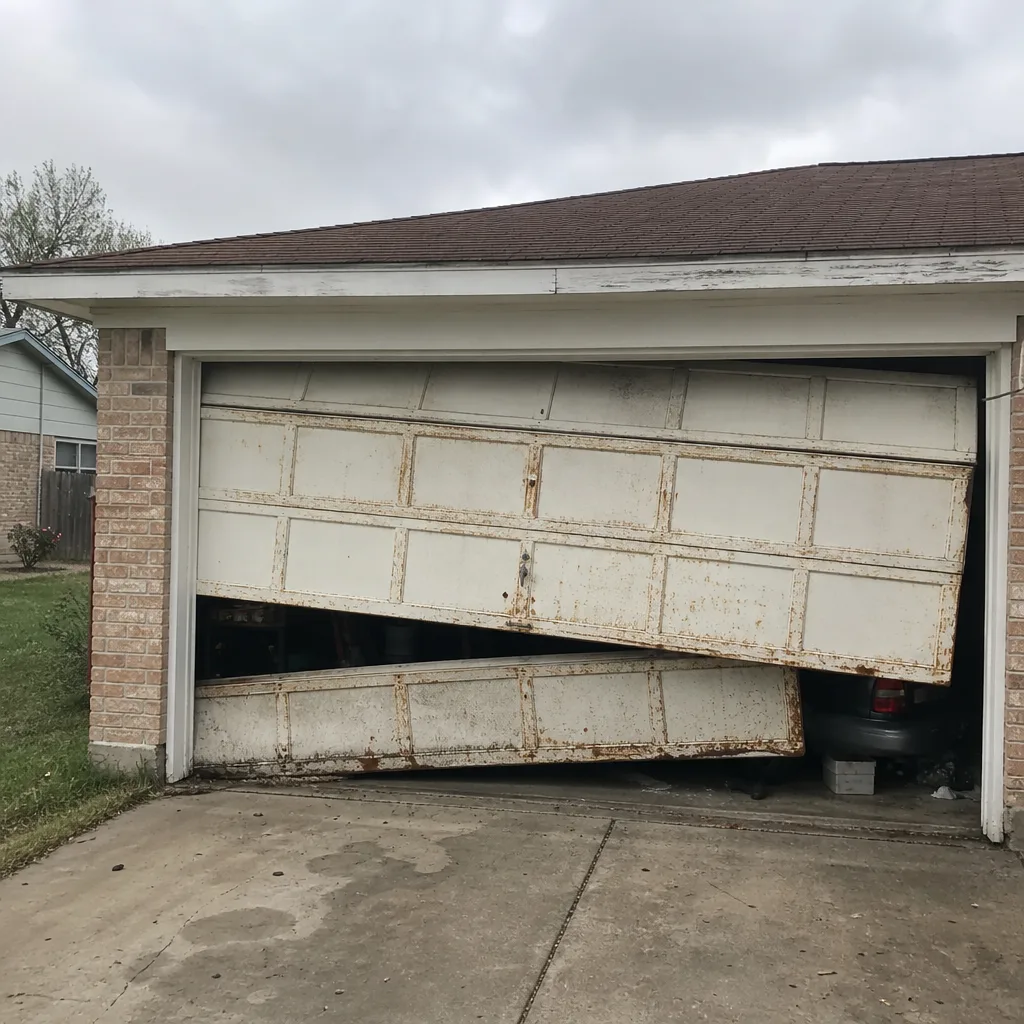 Before
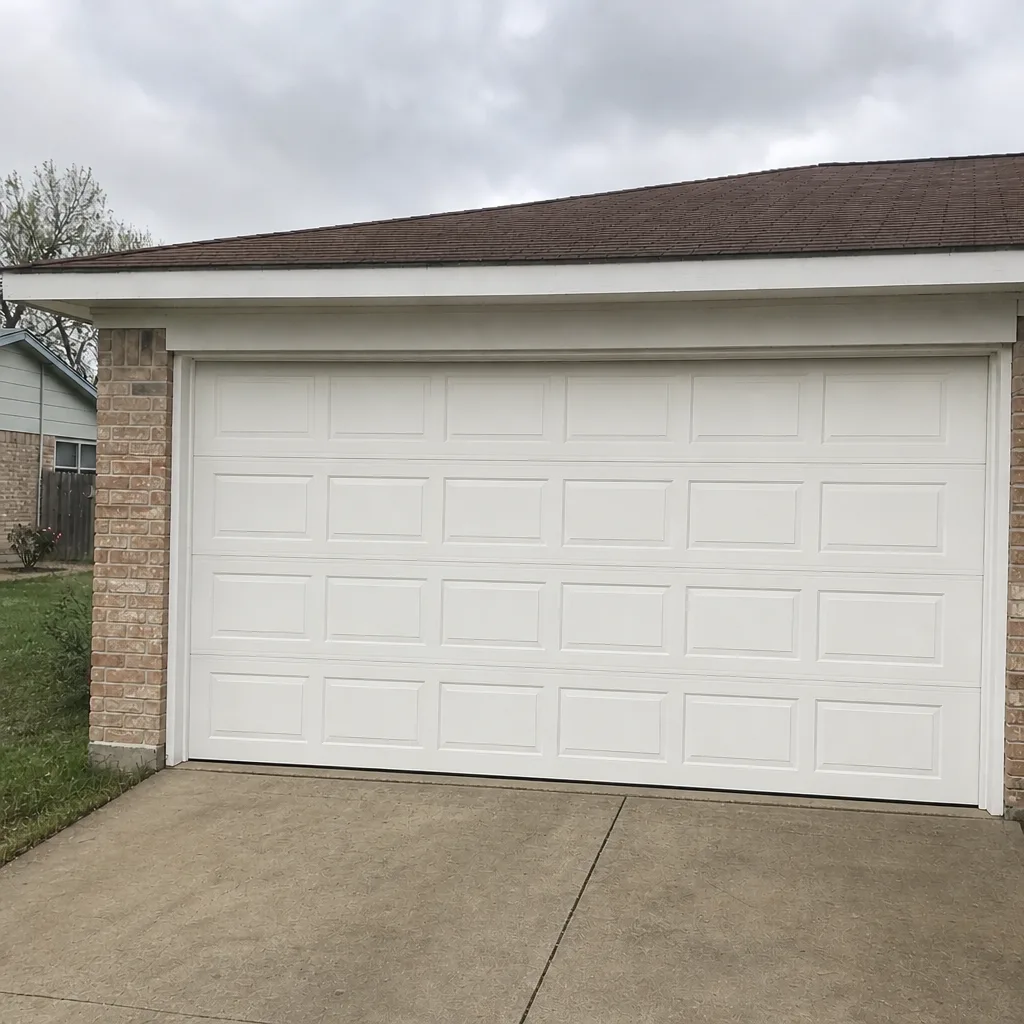 After
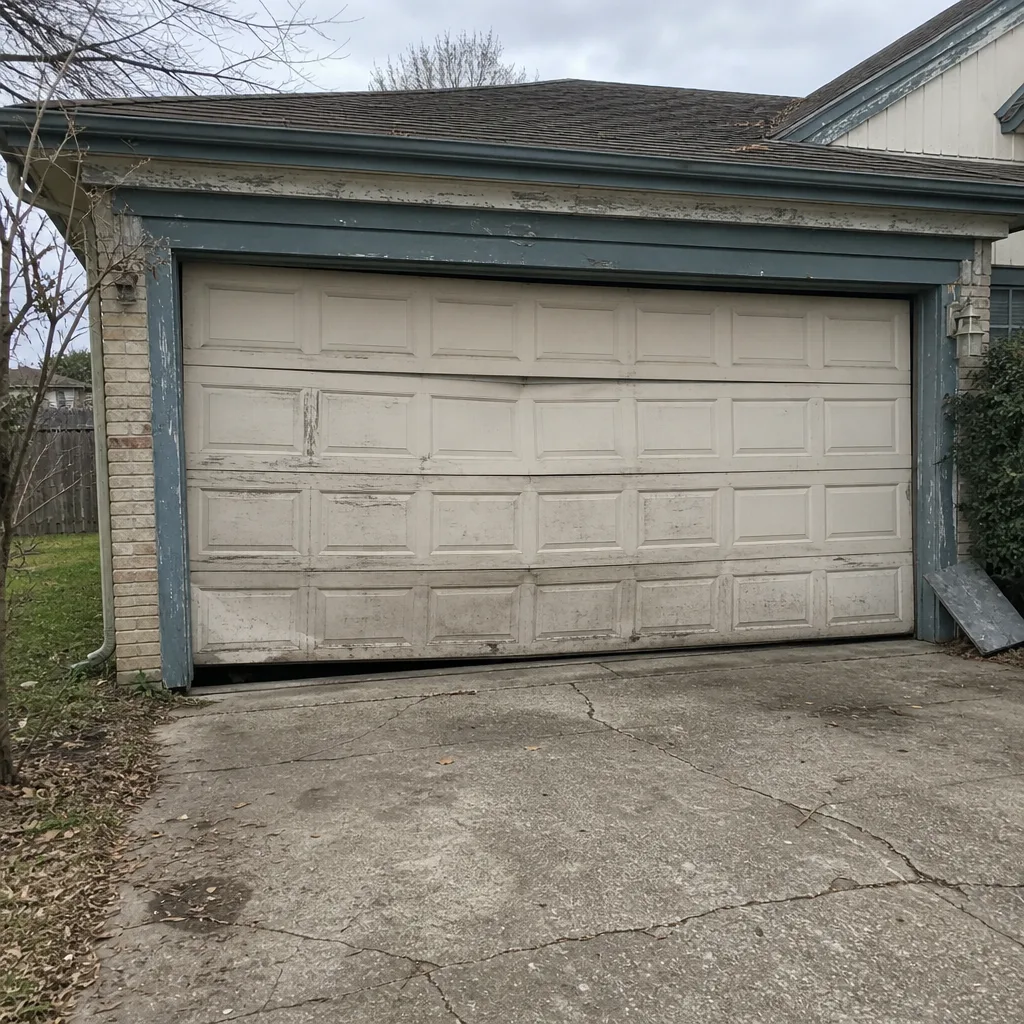 Before
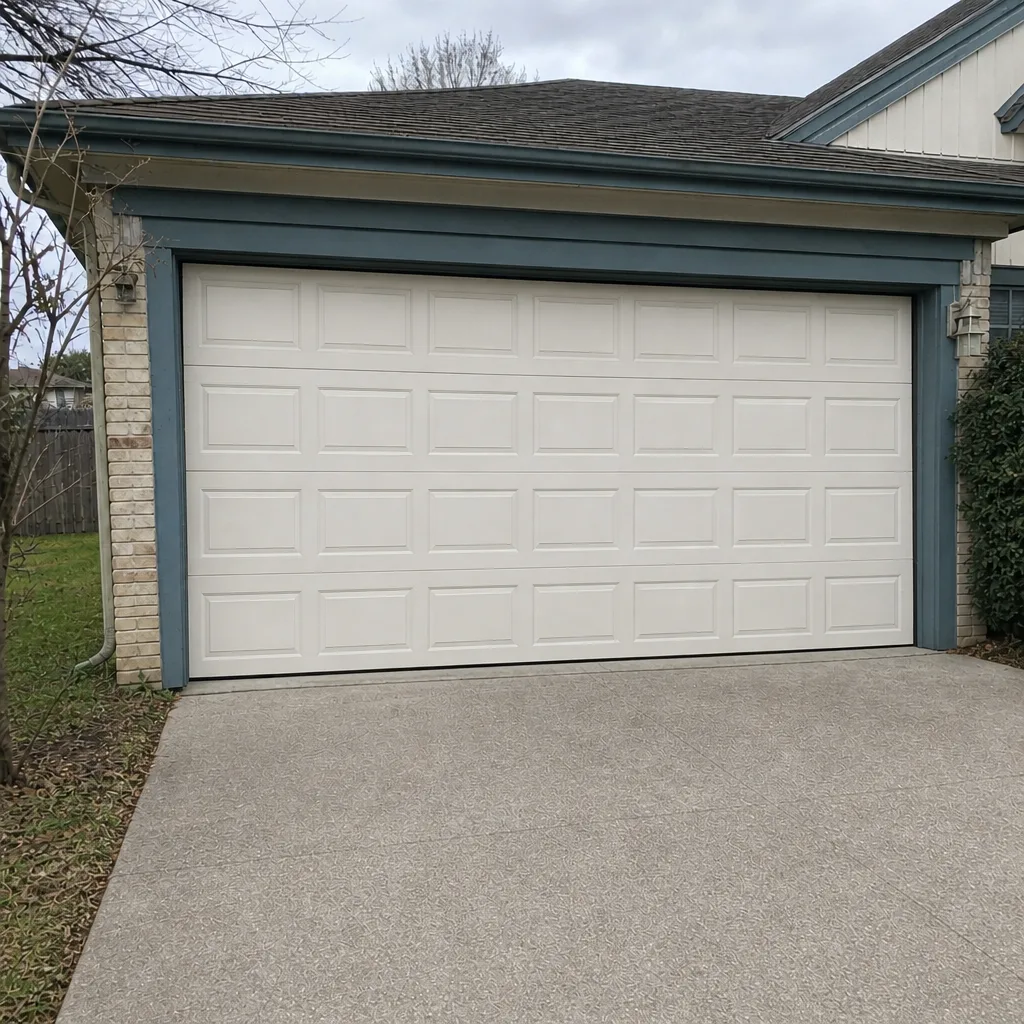 After
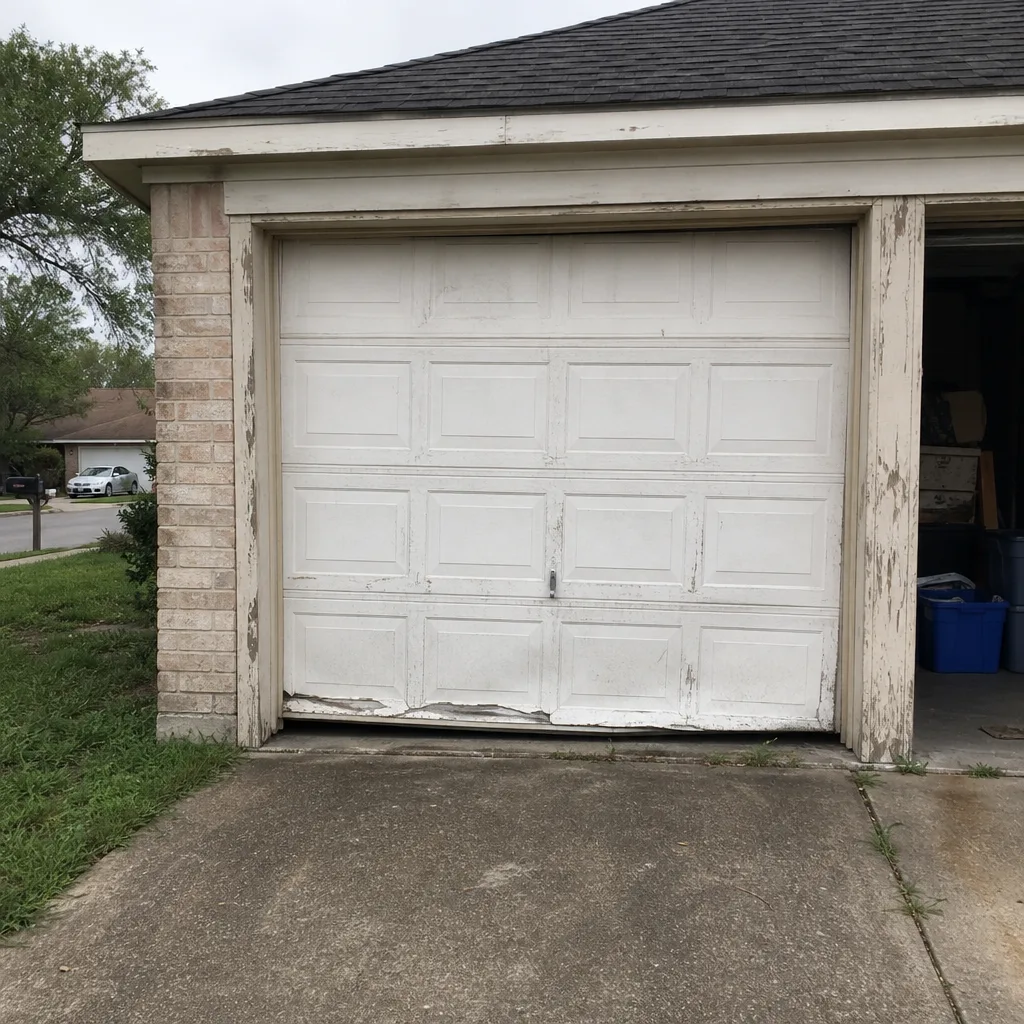 Before
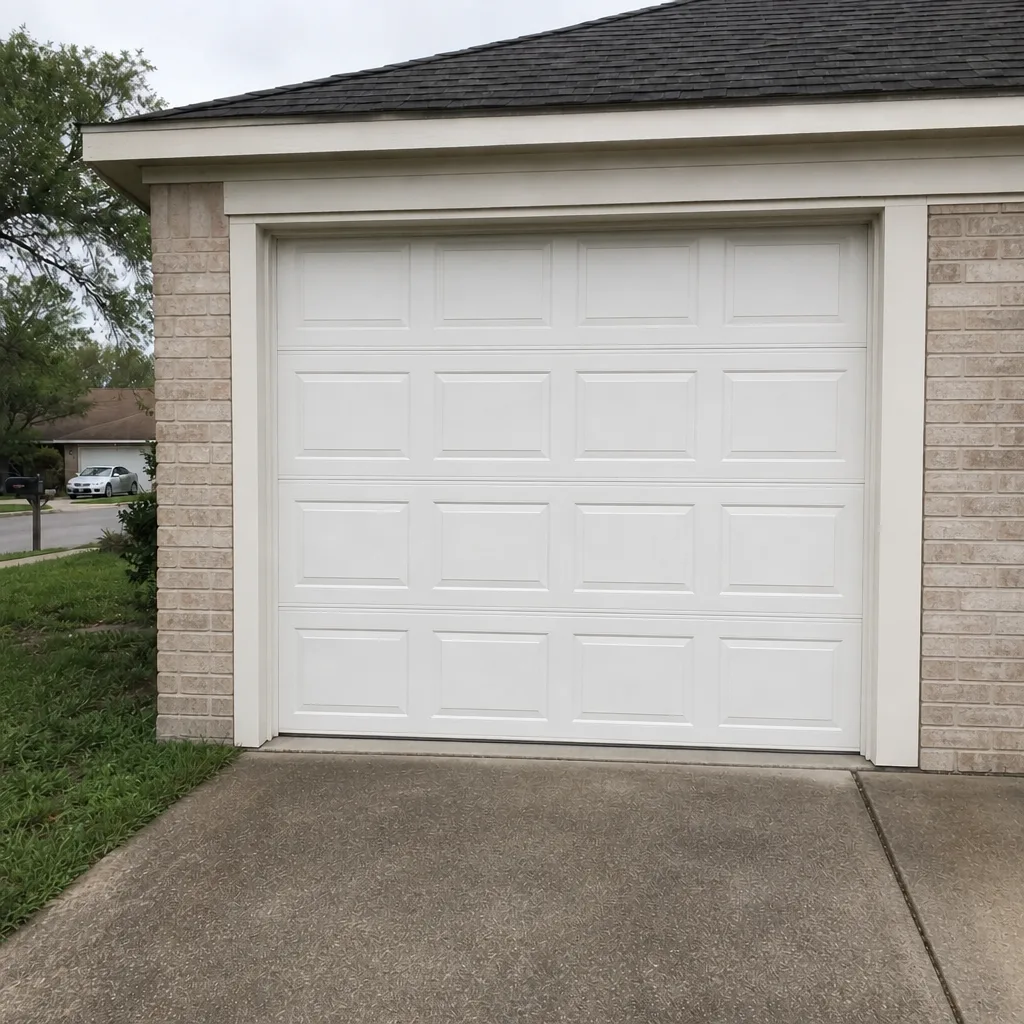 After
When to Call a Professional
Call a garage door technician in these situations: any sign on the “stop using the door now” list (broken spring, frayed or off-drum cable, bent track, visibly crooked door), any sound that has changed in the last few weeks, a door that reverses on its own or bangs closed, a homeowner-level concern that your opener is failing to move the door, and any repair or replacement you’re considering after noticing a sign. DIY is fine for trying the manual release and cleaning the photo-eye sensors. Springs and cables are not a DIY job on any door. Pearland Garage Door Repair Pros offers free estimates in Pearland – call (844) 956-5614 for a written quote. Our technicians have up to 10 years of experience, and we work on LiftMaster, Chamberlain, Genie, Clopay, Amarr, Wayne Dalton, Craftsman, and Raynor systems specifically.
Frequently Asked Questions
The first reliable sign is usually a change in sound or lifting feel, not a break. You’ll hear a soft pop or feel the door suddenly heavier on the last third of the up cycle, and the door may sit slightly crooked when fully closed. If a torsion spring is involved, a visible gap in the coil means it has already broken and the door should not be used until it’s replaced. Call (844) 956-5614 for a free estimate in Pearland.
Disconnect the opener (use the manual release handle) and try lifting the door by hand. A properly balanced door should lift smoothly with one hand and stay roughly where you leave it. If it’s heavy, jerks, or falls, the door and its springs are the problem. If the door moves easily by hand but the opener won’t drive it, that’s an opener repair. Call (844) 956-5614 and we’ll walk the description through with you before booking.
Heat and humidity accelerate the two things that fail first: bearing lubricant and spring wire thickness. A Pearland garage stays hot for more of the year than a drier climate, so worn rollers squeal and dust sooner, and springs under constant load lose tension faster. The warning signs that might show in a season elsewhere can appear in weeks here, which is why we recommend acting on early signs rather than waiting. Call (844) 956-5614 for a free estimate.
It usually isn’t dangerous the moment it happens, but the cause matters. A reversing door is most often the photo-eye sensors (dirt, misalignment, obstruction), which is a safety feature doing its job, not a structural problem. If the reversal happens with no obstruction in the path, that points to an opener limit or logic issue. Either way it’s worth diagnosing rather than ignoring, and a free estimate costs you nothing. Call (844) 956-5614.
No. Torsion and extension springs are under high tension, and the stored energy is exactly what makes them dangerous. There is no homeowner-safe version of spring replacement, and we don’t walk anyone through it. The right move is a trained professional, and our technicians handle spring repair as a dedicated service. Call (844) 956-5614 for a free estimate in Pearland.
That’s the ideal time to call. A single early sign (a new sound, a hint of rusty dust on a roller, a door that’s slightly slow) means the component is still in its wear phase, not its failure phase, which is usually the cheaper and simpler repair. Pearland Garage Door Repair Pros offers free estimates in Pearland, so getting it looked at early costs you nothing. Call (844) 956-5614.
The Bottom Line
Garage door warning signs are a language, and once you know what to listen and look for, you can catch most failures in their early, cheaper stage. The pattern is consistent: a new sound means a wear point, a movement change means balance or tension, and a visual change on the springs or cables means the door is at or near the limit. In Pearland, heat and humidity compress that timeline, so a sign worth watching elsewhere is worth scheduling here. Act on the early signs, never touch the springs or cables yourself, and call a technician when the door has crossed the “stop using it” line. Whether it’s a broken spring, a failing opener, or a full replacement, a proper diagnosis means the right fix for your specific door and opener.
If you’ve spotted any of the signs in this guide, call Pearland Garage Door Repair Pros at (844) 956-5614 for a free estimate. We’ll take your description, look at the door, and give you a written quote before any work starts.
Written by the team at Pearland Garage Door Repair Pros.